
Ant Identification Guide: Recognize & Understand Common Ant Species in Your Home
Ants are some of the most persistent and widespread pests in homes worldwide. While many species are harmless, some, like carpenter ants or fire ants, can cause structural damage or pose health risks. Proper ant identification is the first step toward effective prevention and control.
Understanding the differences between species helps homeowners take targeted action, prevent infestations, and reduce potential harm to property and health. This guide provides a professional approach to identifying ants, their behaviors, and nesting habits.
Why Accurate Ant Identification Matters
Properly identifying the ant species in your home is the first step toward effective control. Different ants require different approaches, so accuracy saves time, money, and ensures safety.
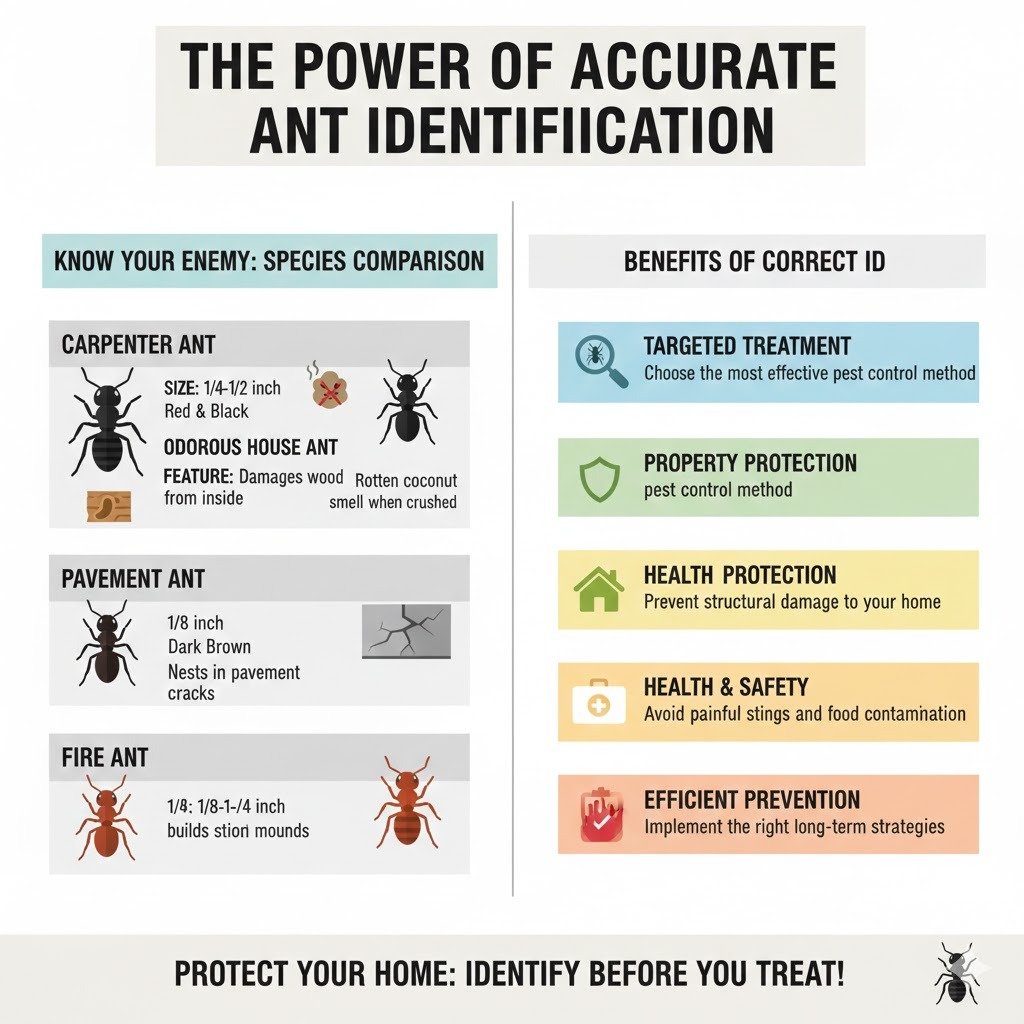
- Targeted Treatment: Different ant species respond to different control strategies. Misidentification can waste time and resources.
- Property Protection: Carpenter ants and other destructive species can damage wood, insulation, and furniture.
- Health & Safety: Certain ants bite or sting, and some carry bacteria that can contaminate food.
Efficient Prevention: Knowing the species helps in applying the right preventive measures and minimizing chemical use.
Common Household Ant Species
Household ants vary in size, color, and behavior. Recognizing common species helps homeowners prevent damage and apply the right strategies.
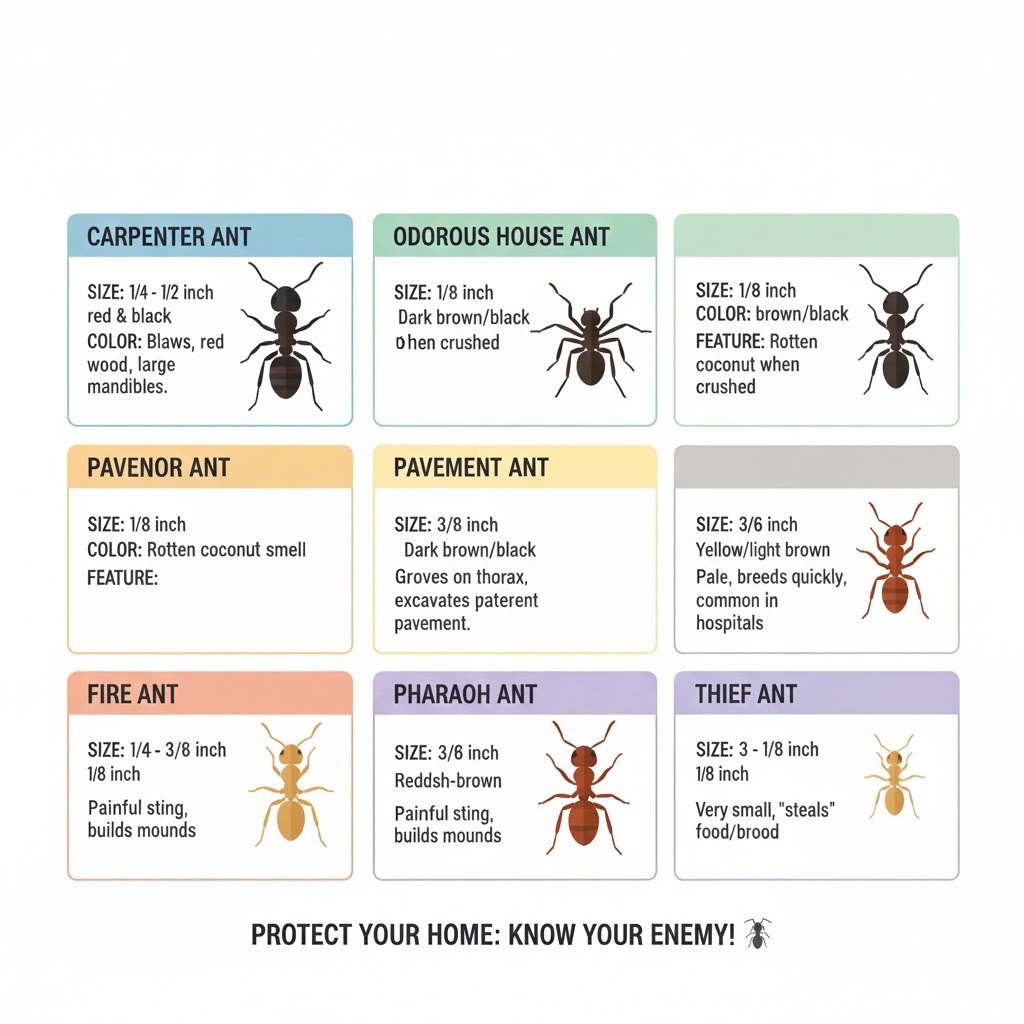
- Carpenter Ants (Camponotus spp.)
Large ants (6–12 mm), black or red and black, nesting in wood, often damp or decaying. Can cause significant structural damage. - Odorous House Ants (Tapinoma sessile)
Small (2–3 mm), dark brown to black, emit a strong, sweet or coconut-like odor when crushed. Prefer indoor nesting near food and moisture. - Pavement Ants (Tetramorium caespitum)
Small (2–4 mm), dark brown or black, with two nodes on the waist. Usually nest under pavement, sidewalks, or cracks near homes. - Pharaoh Ants (Monomorium pharaonis)
Tiny (1.5–2 mm), light yellow to reddish-brown, form multiple colonies indoors. Difficult to eradicate once established. - Fire Ants (Solenopsis spp.)
Medium-sized, reddish-brown, aggressive stingers that inject venom. Mostly outdoor pests but may enter homes.
Thief Ants (Solenopsis molesta)
Extremely small (1–2 mm), pale yellow to light brown. Nest near other ant colonies to steal food and often go unnoticed.
Key Identification Features
Focusing on physical traits and behaviors ensures accurate species recognition, which is critical for control and prevention.
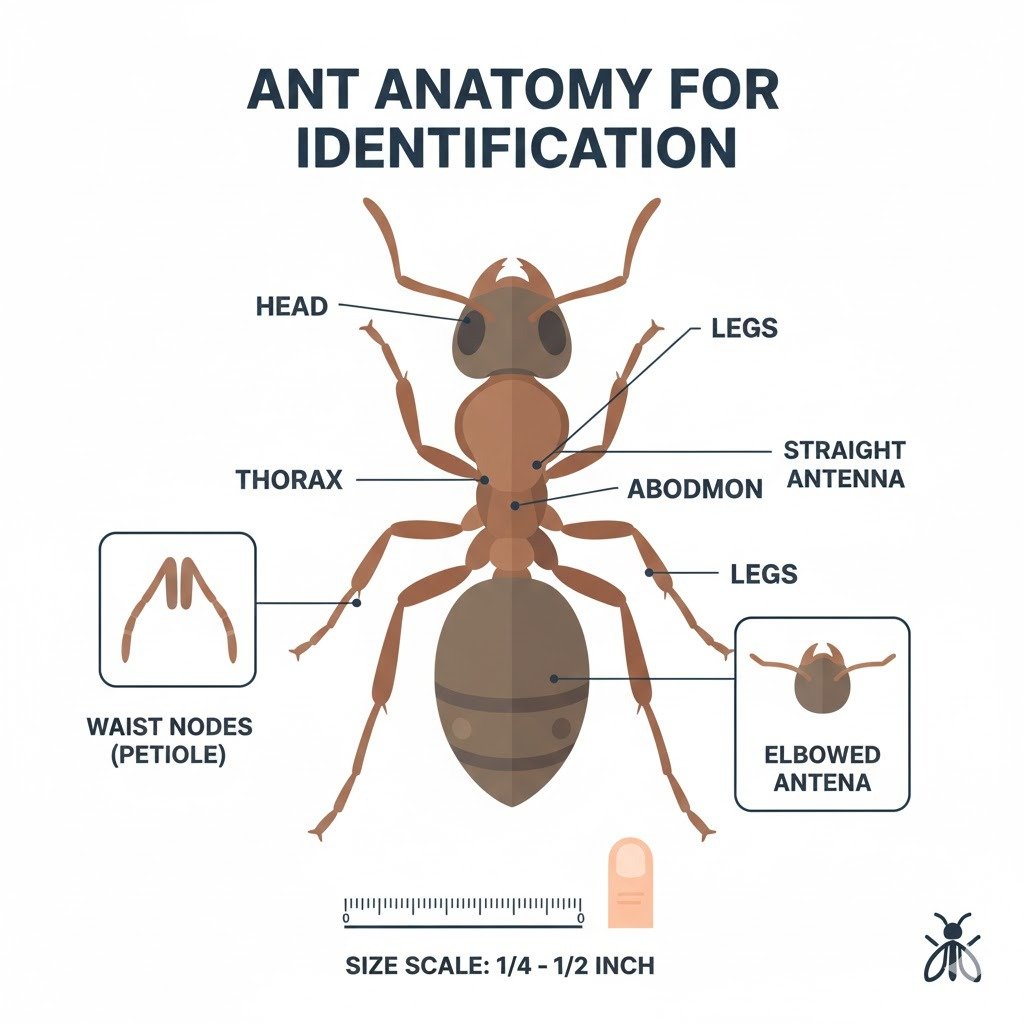
- Size & Color: Measure length and note overall color or patterns.
- Body Segmentation: Examine head, thorax, abdomen, and waist nodes (petiole).
- Antennae: Look for straight or elbowed forms.
- Legs: Note number, length, and proportion to body.
Behavior: Observe foraging trails, nesting spots, and activity patterns (day/night).
Signs of Ant Presence
Early detection is essential for effective prevention. Recognize these common signs to identify ant activity quickly.
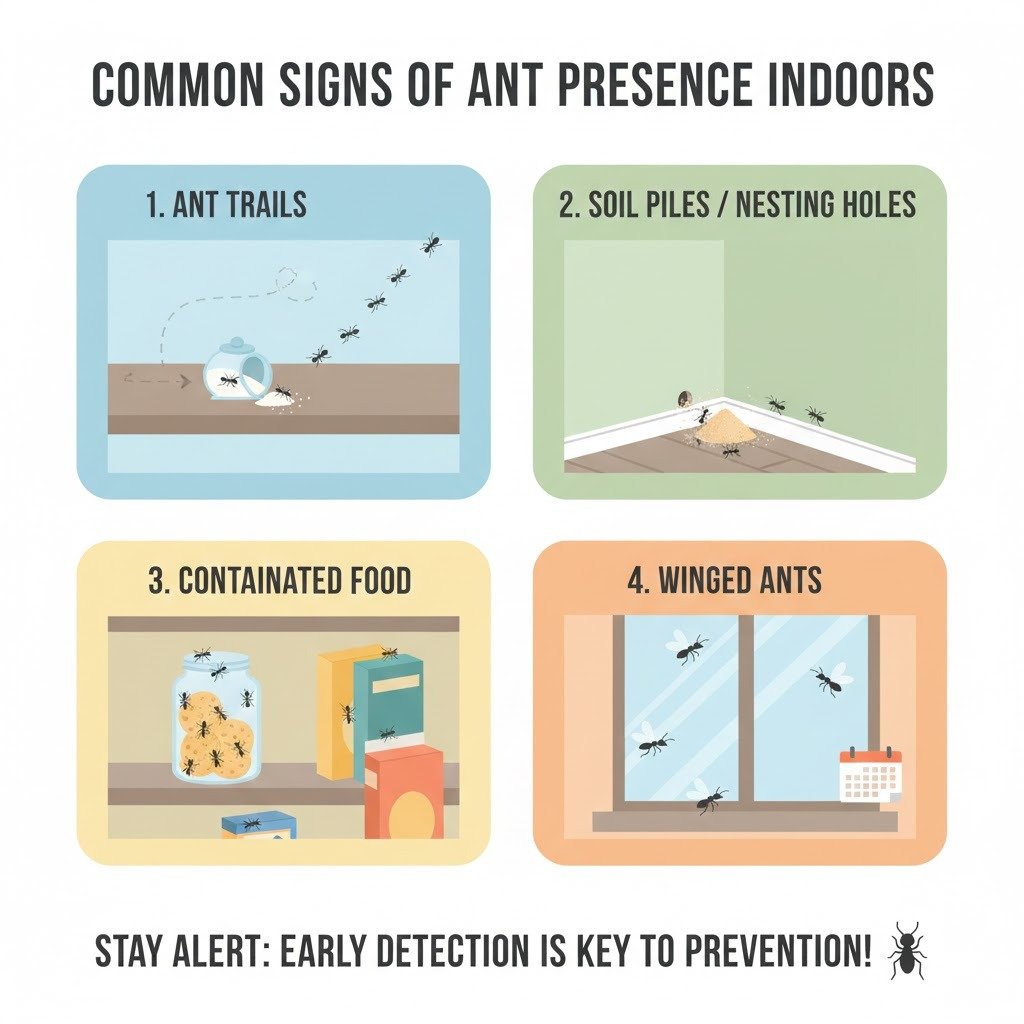
- Visible trails along walls, floors, and windows
- Nesting evidence such as soil piles, sawdust, or small holes
- Contaminated food in pantries or kitchen surfaces
- Multiple ants indoors over time
Presence of winged ants during mating season
High-Risk Areas
Ants prefer certain locations that provide food, water, and shelter. Focus monitoring and prevention on these zones.
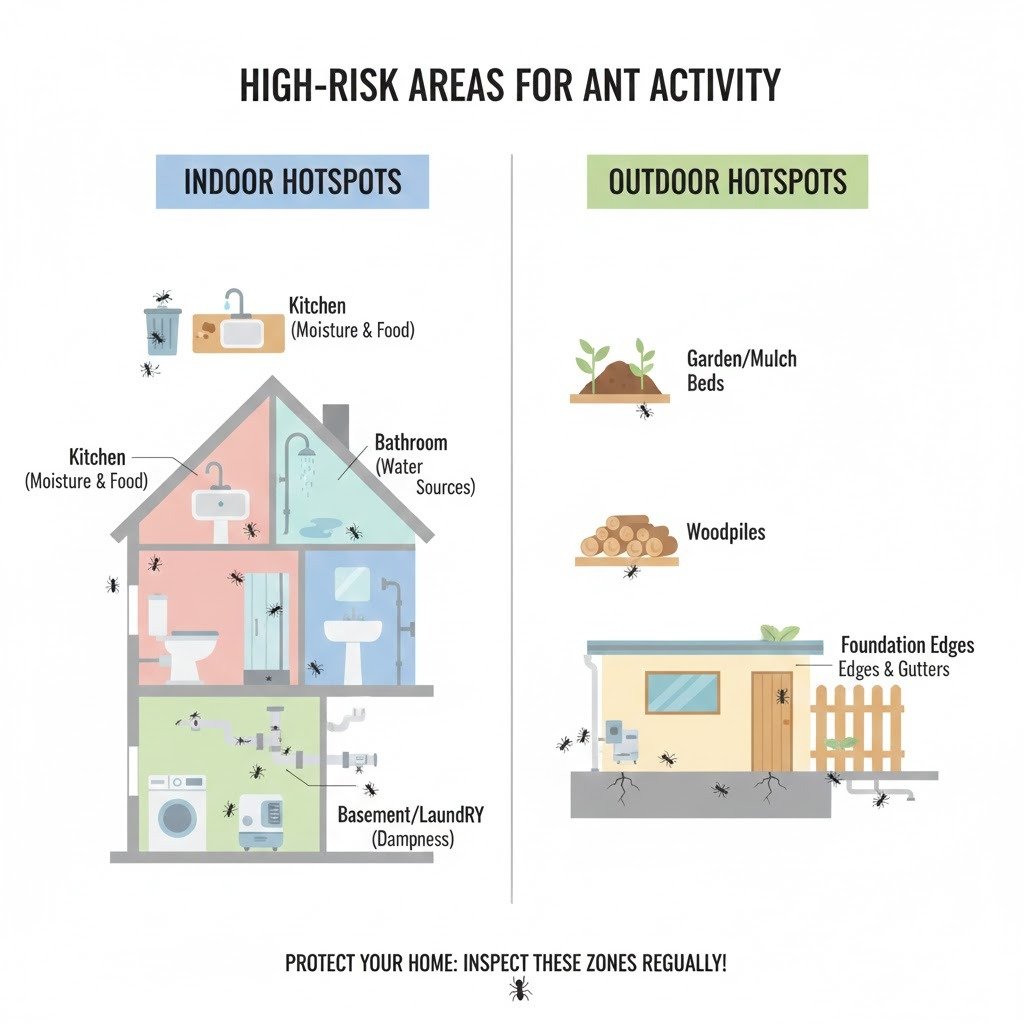
- Indoors: Kitchens, pantries, bathrooms, basements, laundry rooms
- Outdoors: Gardens, mulch, leaf litter, woodpiles, foundation edges
- Moist Areas: Around sinks, under appliances, near plumbing, damp basements
High-Risk Areas
Consistent monitoring helps catch infestations early and allows for precise identification of the species.
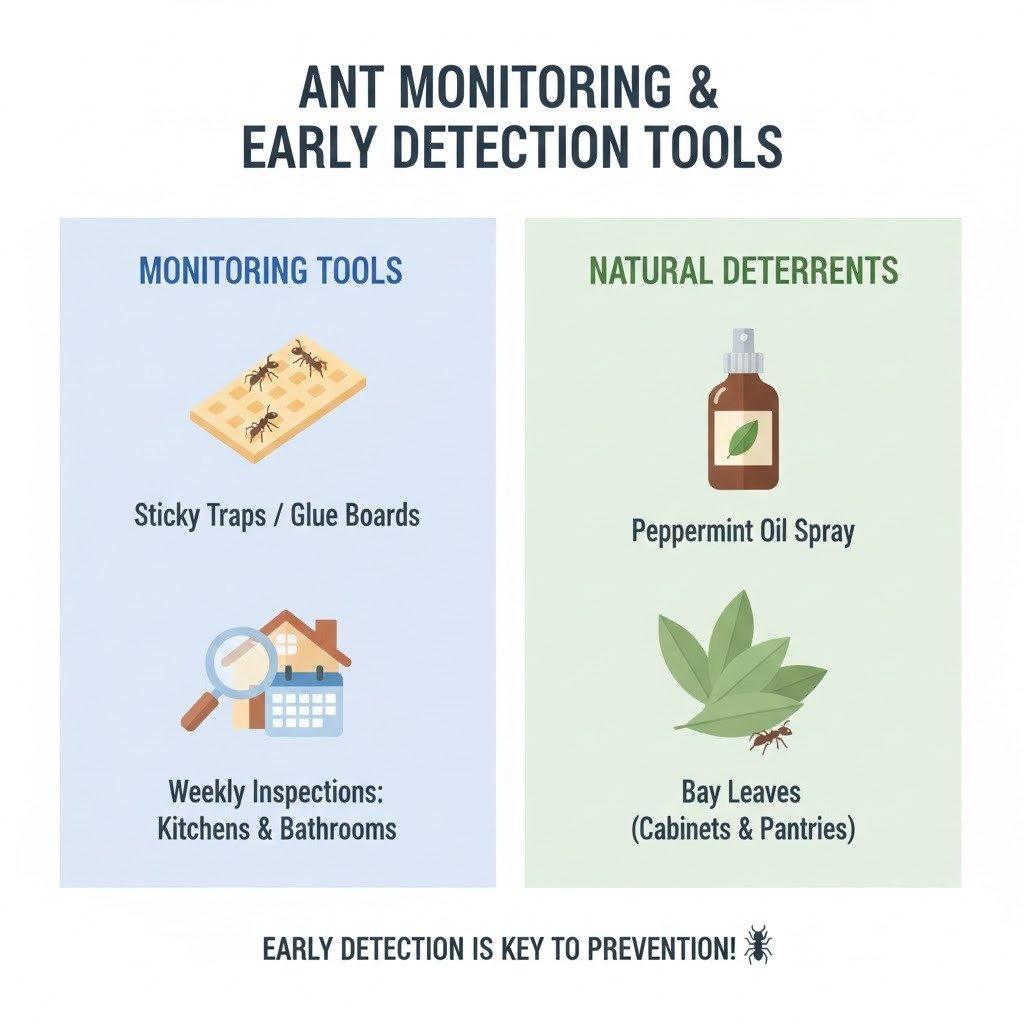
- Sticky Traps & Glue Boards: Place along walls, behind appliances, and under sinks to capture specimens.
- Observation Logs: Track location, number, and movement patterns.
- Weekly Inspections: Check kitchens, bathrooms, basements, garages, and storage spaces.
- Photographs: Capture specimens for comparison with identification guides.
Conclusion
Proper ant identification is essential for effective pest management. Recognizing species, behaviors, and high-risk areas allows homeowners to respond appropriately, whether implementing preventive measures or preparing for professional intervention.
- Observe ants’ size, color, body shape, and antennae
- Track activity patterns and nesting spots
- Identify high-risk indoor and outdoor areas
- Use monitoring tools like traps and logs to support accurate identification
By understanding ant species and their behaviors, you can prevent infestations, protect your property, and maintain a safe, clean home environment.
- Observe ants’ size, color, body shape, and antennae