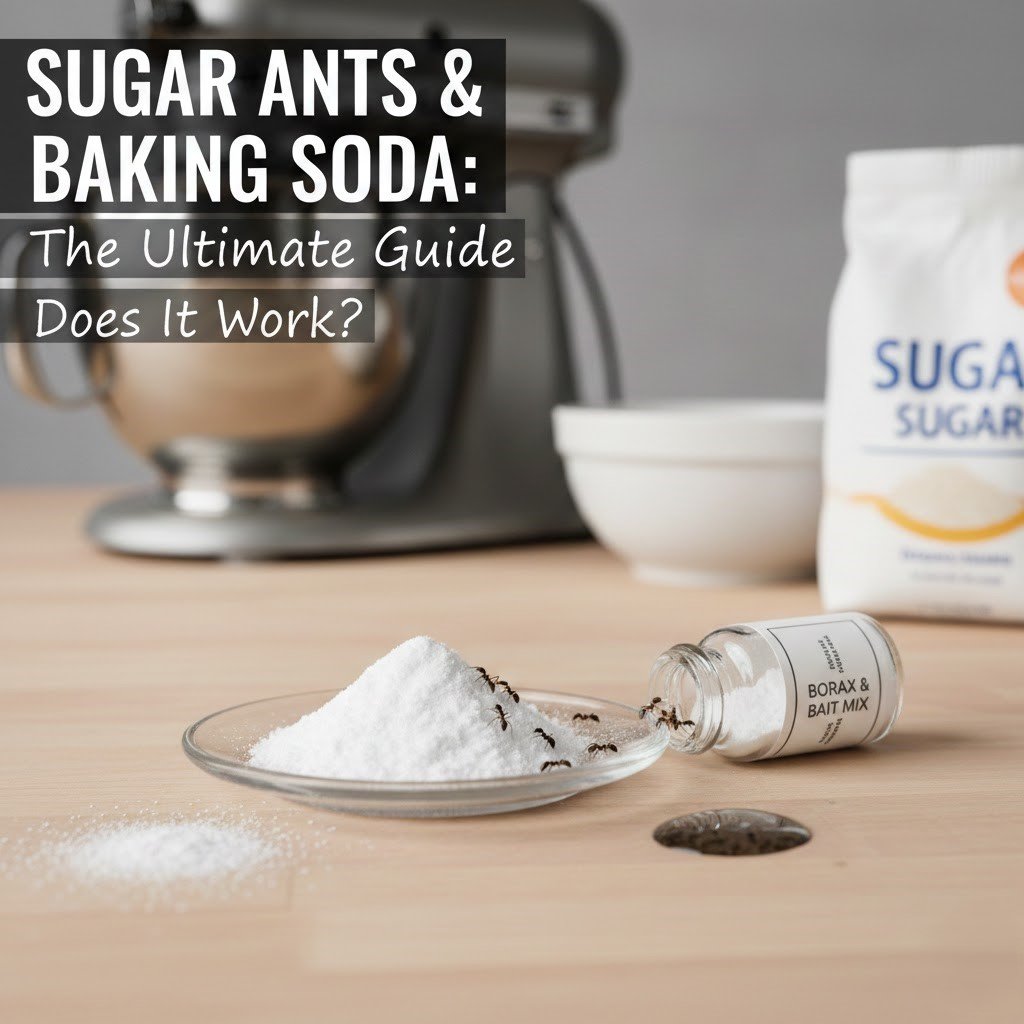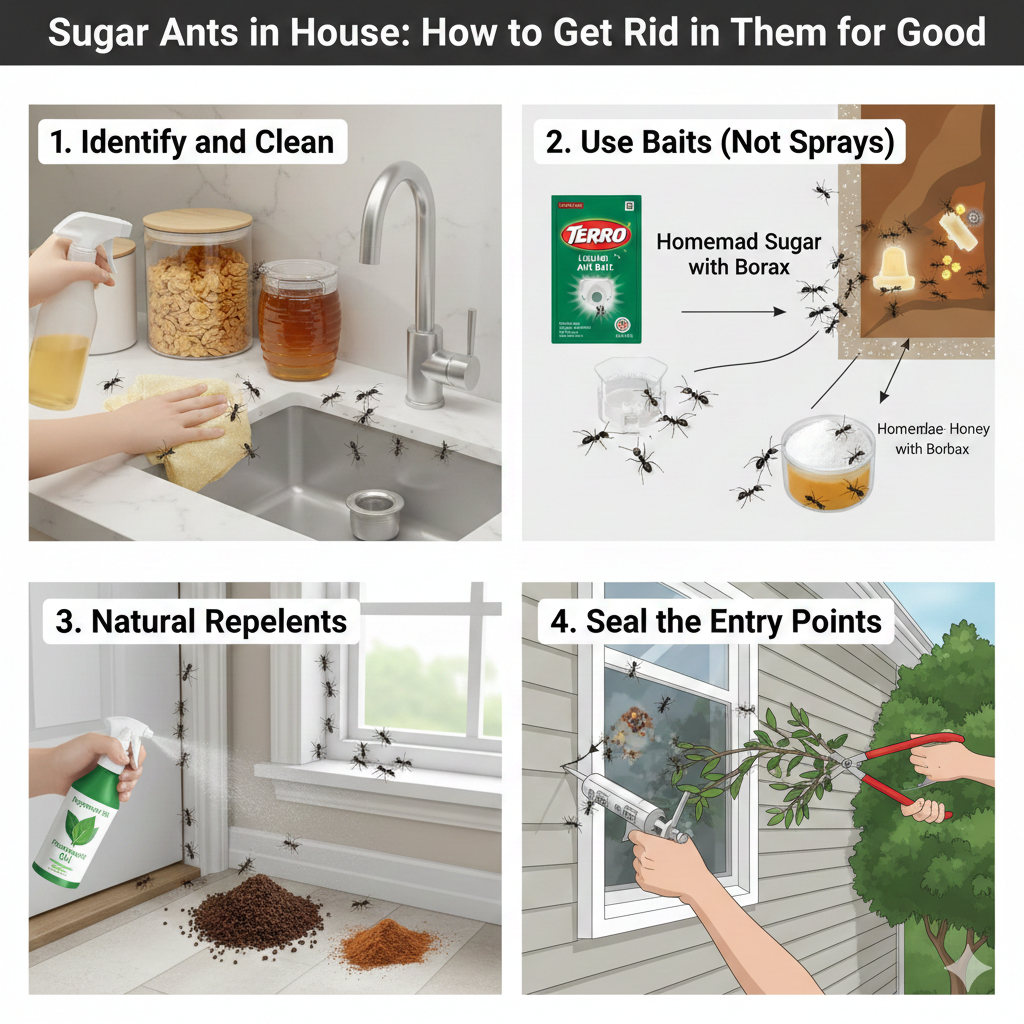
Finding a line of tiny black insects marching across your kitchen counter is enough to make any homeowner’s skin crawl. If you’ve found yourself asking, “How do i get rid of sugar ants?” while frantically wiping down your counters, you are certainly not alone. These resilient pests are experts at finding even the most microscopic food source and signaling their entire colony to descend upon your home.
The reality is that squashing the ants you see is a losing battle. To truly understand how to get rid of sugar ants, you must move beyond temporary fixes and address the root of the colony. In this ultimate removal guide, we’ll explore the 10 most effective, professional-grade methods to eliminate sugar ants and keep them from ever coming back.
1. Deep Sanitation: Remove the “Welcome Mat”
The first and most important step in any ant removal plan is removing the incentive. Sugar ants are scouts; they are constantly looking for high-energy food sources (sugar, proteins, and fats).
- Wipe with Vinegar: Use a 50/50 solution of white vinegar and water. This doesn’t just clean; it destroys the pheromone trails (invisible chemical paths) that ants use to lead their sisters to food.
- Target Hidden Crumbs: Clean behind the toaster, inside the microwave, and under the refrigerator. A single drop of spilled honey can feed hundreds of ants for days.
- Pet Food Management: Never leave pet food bowls out overnight. Store dry kibble in airtight plastic containers rather than the original paper bags.
2. Liquid Borax Baits (The Colony Killer)
When homeowners ask, “how do i get rid of sugar ants permanently?” the answer is almost always baiting. Unlike contact sprays that only kill the ants you see, liquid baits use a slow-acting poison.
Worker ants are attracted to the sugary liquid. They drink it, carry it back to the nest, and feed it to the queen and larvae through a process called trophallaxis. Within 3 to 7 days, the entire colony is eliminated from the inside out.
Professional Tip: If you see hundreds of ants swarming your bait station, do not kill them. They are your delivery drivers, carrying the treatment directly to the source.
3. Diatomaceous Earth: The Natural Barrier
For a non-toxic approach, food-grade Diatomaceous Earth (DE) is a must-have. This powder is made from fossilized algae and acts like microscopic shards of glass. When an ant crawls through it, the powder cuts their exoskeleton and dehydrates them.
- Where to apply: Sprinkle a thin layer along baseboards, behind appliances, and near suspected entry points.
- Safety: Always use “food-grade” DE, which is safe for pets and children if used according to label instructions.
4. Sealing Entry Points with Silicone Caulk
You can kill every ant in your house, but if you don’t seal the “doors,” new colonies will simply move in. Sugar ants can fit through gaps as thin as a credit card.
- Inspect Windows and Doors: Look for cracks in frames or gaps in weather stripping.
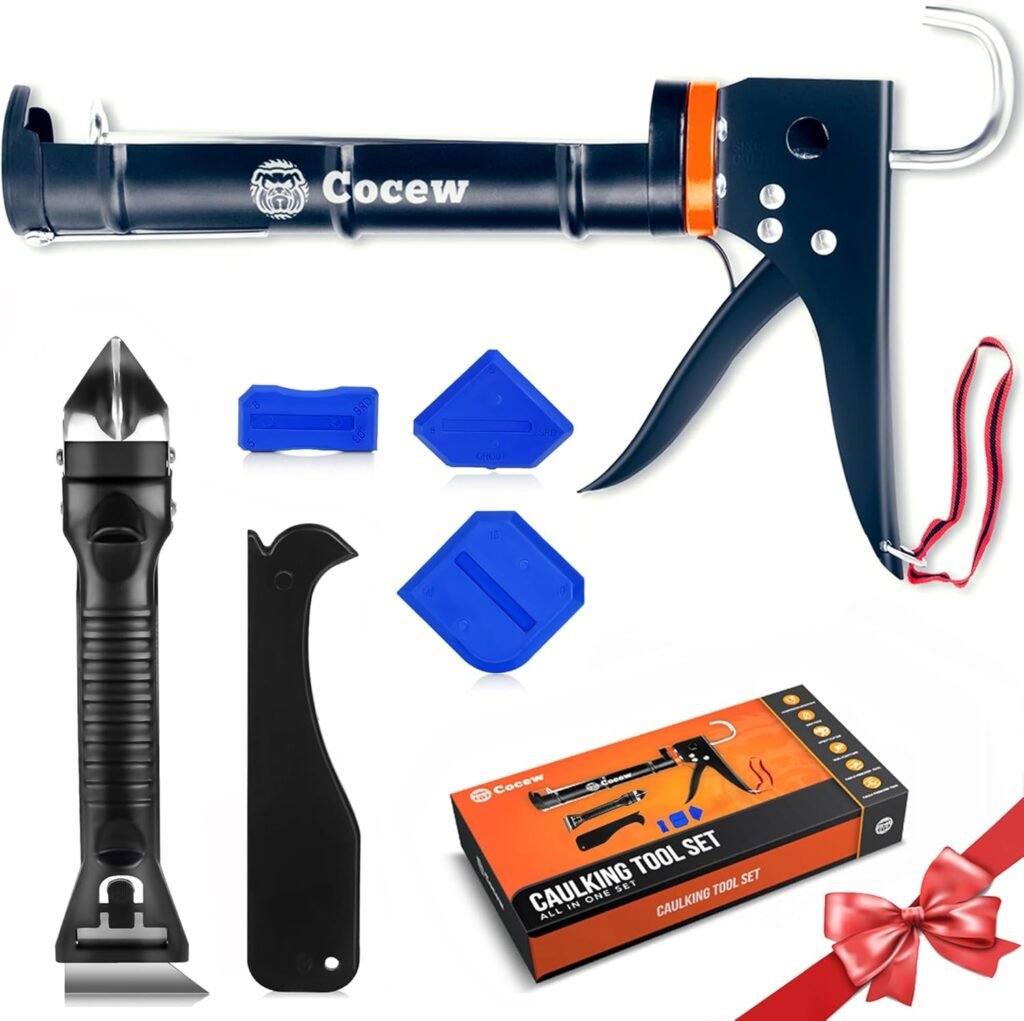
- Utility Lines: Check where pipes and wires enter your home. Use silicone caulk or expanding foam to seal these high-traffic ant highways.
5. Essential Oil Repellents
While essential oils may not destroy a colony, they are incredibly effective at deterring scouts from entering specific areas.
- Peppermint Oil: Ants find the strong scent of menthol overwhelming and will avoid it.
- Tea Tree Oil: Highly effective at masking trails.
- How to use: Mix 15–20 drops of oil with 2 cups of water and spray along windowsills and door thresholds.
6. The Baking Soda and Powdered Sugar Method
This is a classic DIY “stomach poison” for ants. Because baking soda is basic, it reacts with the acidic environment of an ant’s digestive system.
- The Recipe: Mix equal parts baking soda and powdered sugar.
- The Science: The sugar attracts them, and the baking soda kills them. Place small amounts in shallow lids near ant trails.
7. Boiling Water on Exterior Mounds
If you can find the actual ant hill outside your home, you have a chance for an immediate “reset.” Pouring 1–2 gallons of boiling water directly into an ant mound can collapse the structure and kill the queen instantly. This is most effective for pavement ants or fire ants nesting near your foundation.
8. Coffee Ground Barriers
Used coffee grounds are highly acidic and have a strong scent that disrupts ant navigation. While they won’t kill the ants, spreading dried coffee grounds around the perimeter of your home or in garden beds can act as a natural “keep out” sign.
9. Terro Bait Stations (Commercial Grade)
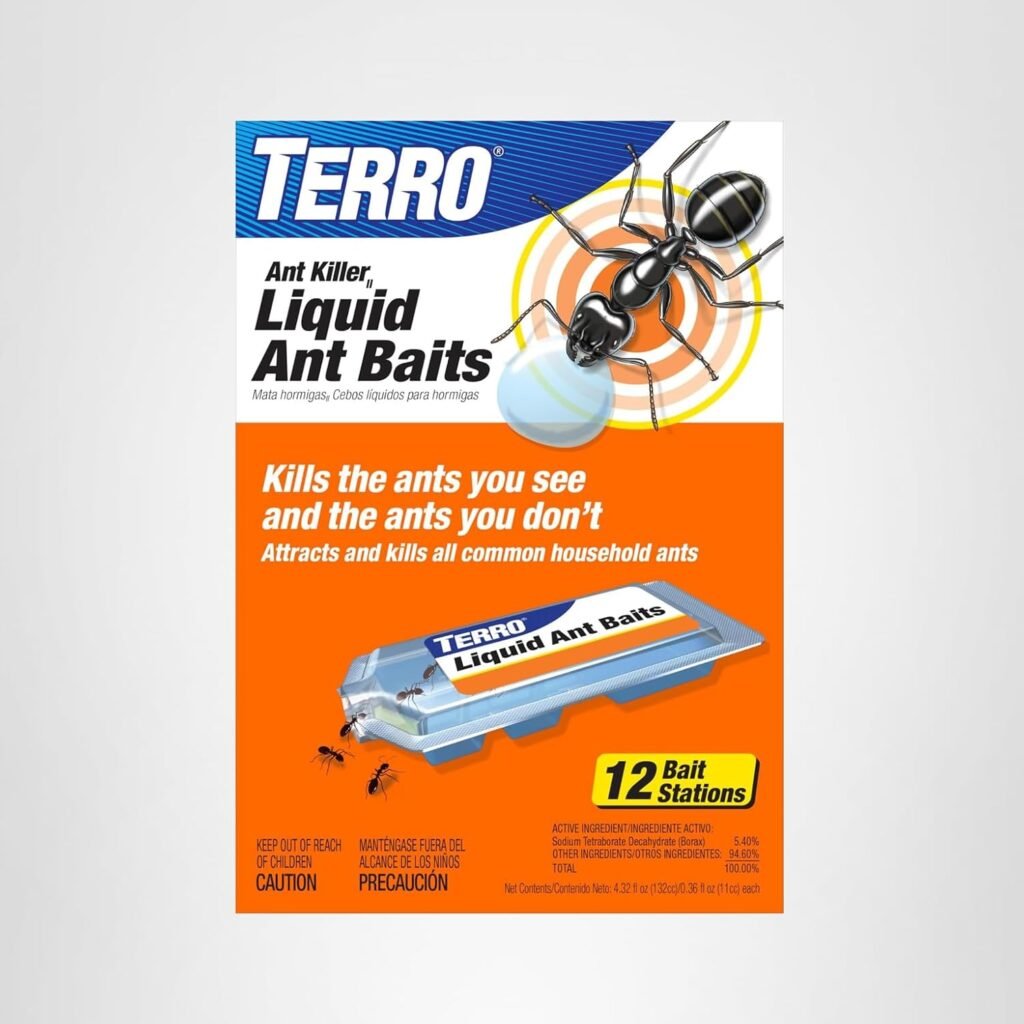
If DIY mixes feel too complicated, commercial Terro Liquid Ant Baits are the gold standard for consumer-available pest control. They use Borax as the active ingredient and are pre-filled, making them easy to place in corners, under sinks, and behind toilets where sugar ants frequently hide.
10. Professional Landscape Management
Often, the reason you have ants inside is because your yard is too “ant-friendly.”
- Trim Branches: Ensure no tree limbs or shrubs touch your siding. These act as bridges that allow ants to bypass your foundation treatments.
- Manage Mulch: Keep mulch at least 12 inches away from your foundation. Damp mulch is a breeding ground for many ant species.
Comparison of Popular Ant Treatments
| Method | Speed | Effectiveness | Best For… |
| Liquid Baits | 3–7 Days | High | Eliminating the whole colony |
| Diatomaceous Earth | 24–48 Hours | Medium | Creating a protective barrier |
| Vinegar Sprays | Immediate | Low | Erasing scent trails/cleaning |
| Boric Acid Paste | 5–10 Days | High | Targeted indoor treatment |
When “DIY Solution” Isn’t Enough
Sugar ants are notoriously difficult to control because they often have multiple queens and “satellite” colonies hidden deep within wall voids. If you have been baiting and cleaning for more than two weeks and the ants are still appearing in large numbers, it’s a sign that the infestation is deeper than a simple surface treatment can reach.
Professional exterminators have access to non-repellent insecticides and specialized equipment that can reach the heart of the colony without causing “budding” (where the colony splits and makes the problem worse).
Read More Guides: What Kills Sugar Ants? The Best Way to Kill Them for Good
FAQ: Everything You Need to Know About Sugar Ants
Why do sugar ants keep coming back?
Sugar ants leave behind pheromone trails. Even if you kill the current ants, the scent remains. If you don’t use a specialized cleaner (like vinegar) and seal entry points, new scouts from other colonies will follow the same path.
Does cinnamon actually kill ants?
Cinnamon is a repellent, not a killer. Ants dislike the smell and the powdery texture (which can interfere with their breathing), so they will avoid crossing a line of cinnamon. However, it will not destroy the nest.
Can I use bleach to get rid of sugar ants?
Bleach is an effective cleaner and will kill ants on contact, but like vinegar, it does not reach the colony. It is best used for sanitizing surfaces and removing food odors that attract scouts.
Are sugar ants dangerous?
Generally, no. Most sugar ants do not bite or sting humans, and they do not carry the same level of disease as cockroaches or rodents. However, they can contaminate your food supplies and are a significant nuisance.
How do I find where sugar ants are coming from?
The best way to find the source is to track a scout. When you see an ant carrying food, watch it. It will eventually lead you back to a crack in the wall, a window gap, or a baseboard where the nest is located.
Conclusion
The secret to how to get rid of sugar ants isn’t a single “magic” spray; it’s a combination of strategy and persistence. By starting with a deep clean, moving to slow-acting baits to kill the queen, and finally sealing your home’s exterior, you can break the cycle of infestation for good.
Next Steps for a Pest-Free Home:
- Clear all counters and store food in airtight containers.
- Set out liquid Borax baits near active trails.
- Wipe trails with vinegar daily to disrupt communication.
- Seal cracks with silicone caulk once the ants stop appearing.
Stop fighting a losing battle with grocery store sprays. Use these proven methods today and reclaim your kitchen from the “sugar ant army.”