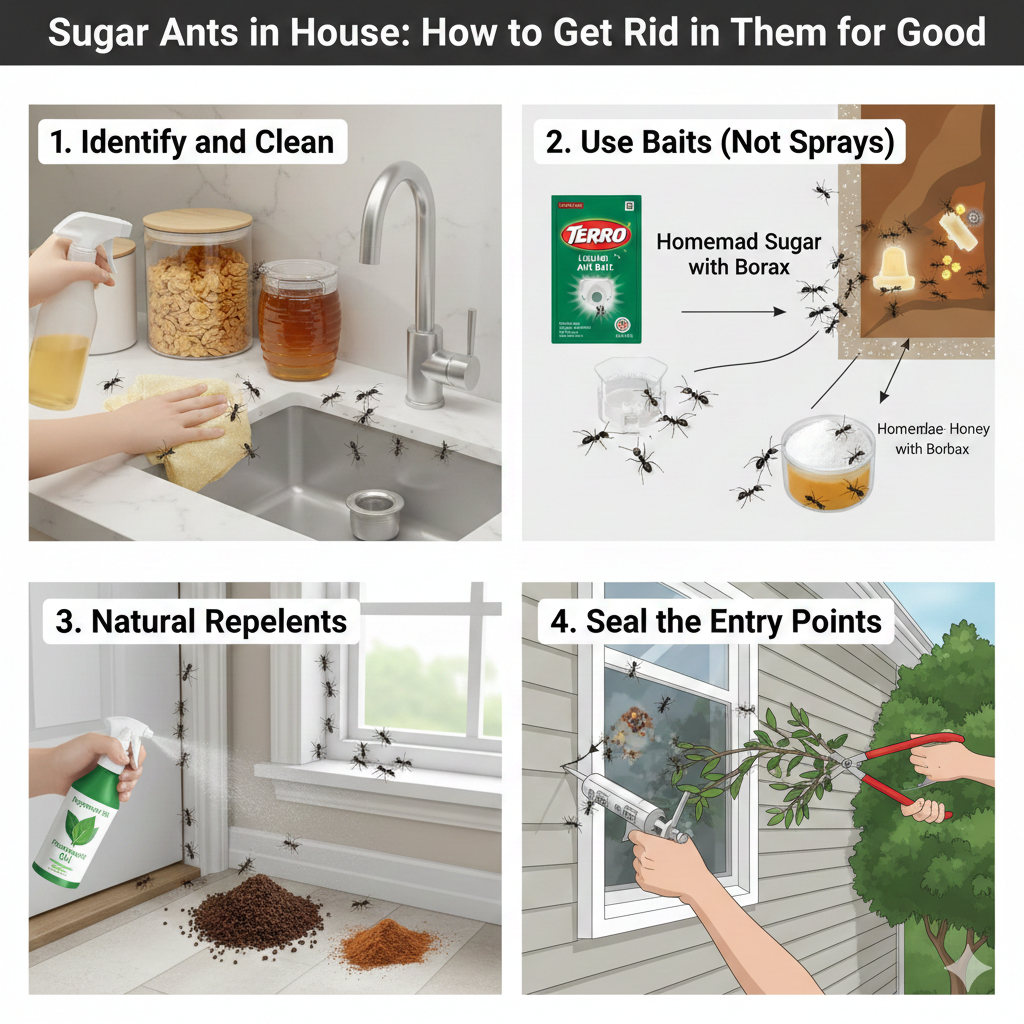
The sight is all too familiar: a thin, shimmering line of tiny black insects winding its way across your white quartz countertop toward a microscopic crumb. You’ve likely tried wiping them away with soap, only for them to return an hour later with reinforcements. For families with small children or curious pets, the heavy chemical scent of industrial pesticides is often just as unwelcome as the pests themselves. This is why the sugar ants baking soda method has become the gold standard for eco-friendly, DIY pest control.
Using baking soda sugar ants solutions isn’t just a “hack”—it is a targeted biological strategy. Sodium bicarbonate (baking soda) is a powerful tool when you understand how to bypass an ant’s natural defenses. In this guide, we will break down the exact science of why this works, provide the most effective 1:1 recipe, and show you where to place your bait stations for maximum impact.
The Science: How Does Baking Soda Kill Sugar Ants?
Many homeowners are skeptical that a simple baking ingredient can outperform a store-bought spray. However, the efficacy of the sugar ants baking soda method lies in the ant’s unique digestive system.
Ants are highly sensitive to pH levels. Baking soda is an alkaline substance. When an ant ingests sodium bicarbonate, it reacts with the acidic digestive fluids in their stomach to produce carbon dioxide gas. Unlike humans, ants lack a complex respiratory and digestive system capable of expelling internal gas. This leads to a fatal buildup of pressure within the insect.
Expert Tip: Ants will not eat pure baking soda on its own because they can detect its alkalinity. The trick is to mask the “medicine” with an irresistible attractant.
The Recipe: The Perfect Baking Soda Sugar Ants Bait
The success of your removal efforts depends entirely on your bait’s texture. Many people fail because they use granulated sugar, which allows the ants to pick out the sweet crystals and leave the baking soda behind.
The Ingredients:
- 1 Part Baking Soda: Acts as the active agent.
- 1 Part Powdered Sugar (Icing Sugar): The texture matches baking soda perfectly, making the two substances inseparable to the ant.
Instructions:
- In a small bowl, mix equal parts baking soda and powdered sugar.
- Stir vigorously until the two powders are completely blended.
- Place small amounts (about a teaspoon) on shallow jar lids or pieces of cardboard.
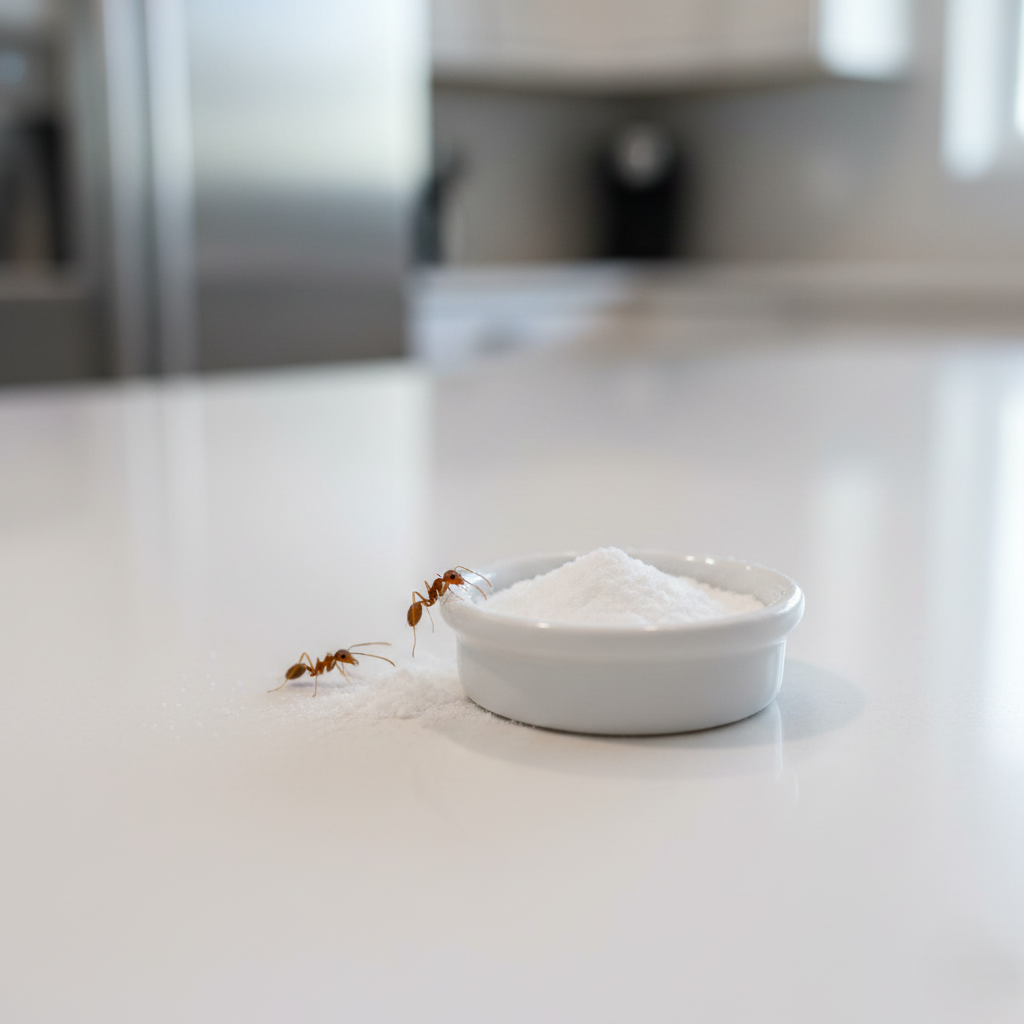
Combining powdered sugar with baking soda creates a bait that ants cannot distinguish from a food source.
Strategic Placement: Where to Put Your Bait
To get the most out of your sugar ants baking soda mixture, you must place it where the ants are already active. Ants follow “pheromone trails”—invisible chemical paths laid down by scouts.
| Location | Why It Works |
| Window Sills | Most sugar ants enter through microscopic cracks in window frames. |
| Behind Appliances | Dark, warm areas behind the fridge or dishwasher are prime nesting spots. |
| Under Sinks | Ants are attracted to the moisture found near plumbing. |
| Baseboard Gaps | These serve as the “highways” for the colony to travel between rooms. |
Important Note: Do not kill the ants you see at the bait station. You need them alive so they can carry the baking soda sugar ants mixture back to the queen. This “Trojan Horse” strategy is the only way to eliminate the entire colony rather than just a few workers.
Safety Review: Children and Pets
One of the primary reasons I recommend the sugar ants baking soda method is its safety profile. According to research on sodium bicarbonate, it is considered a food-grade substance that is non-toxic to humans and animals in small amounts.
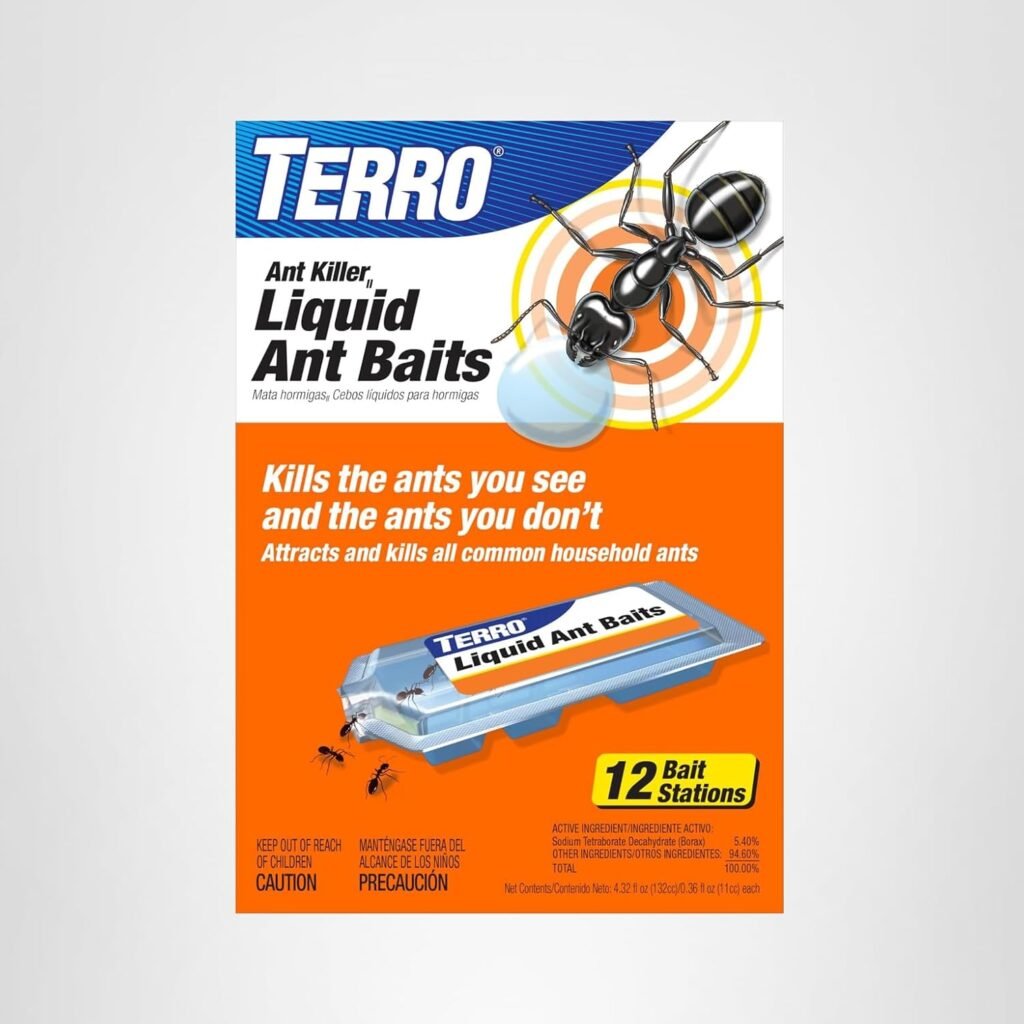
Unlike Borax-based baits, which can cause toxicity if ingested by pets, baking soda is generally safe. However, as with any home remedy, you should place bait stations in hard-to-reach areas (like behind the toaster or inside a cabinet) to prevent your dog or toddler from making a meal out of your ant trap.
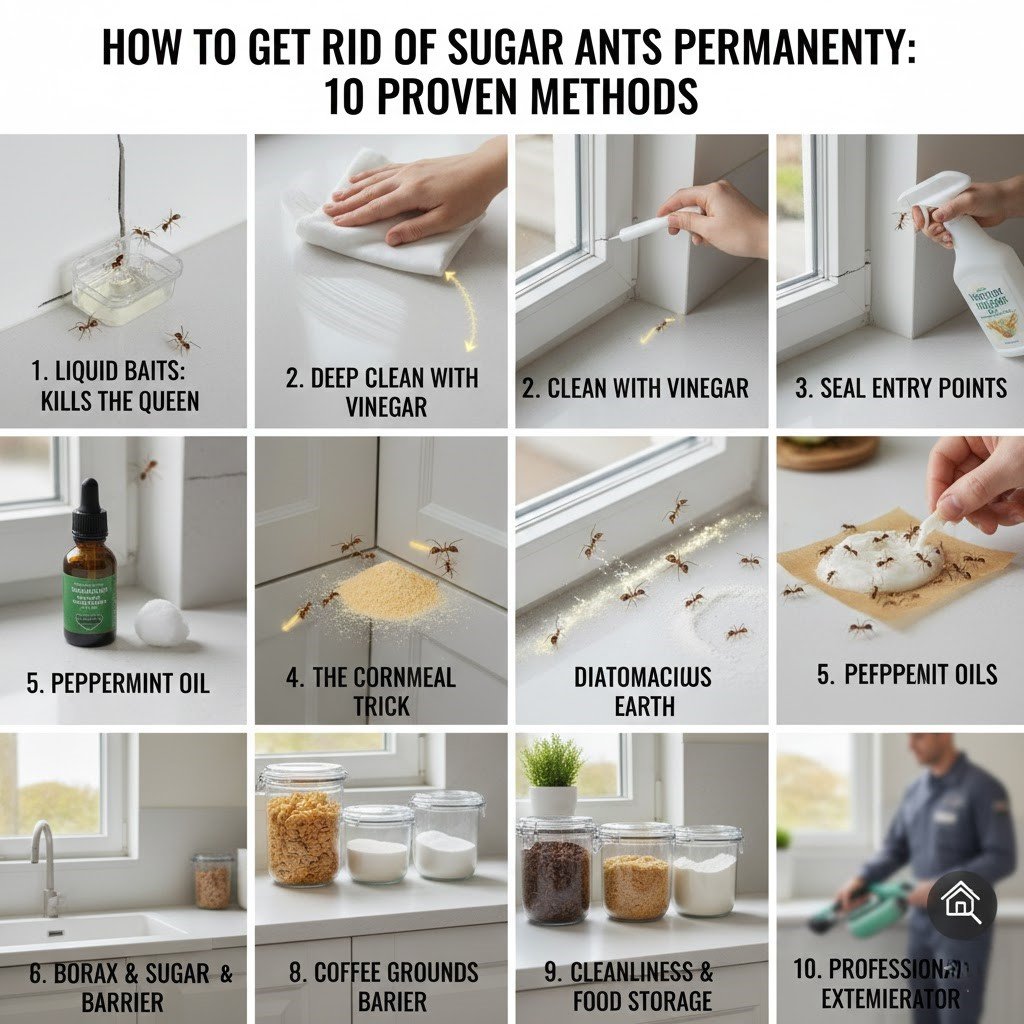
Read More Guide’s: How to Get Rid of Sugar Ants Permanently: 10 Proven Methods
Comparison: DIY Baking Soda vs. Professional Sprays
| Feature | Sugar Ants Baking Soda | Chemical Sprays |
| Safety | High (Non-toxic) | Low (Respiratory irritant) |
| Cost | Less than $1 | $15 – $40 |
| Ease of Use | Simple DIY | Requires protective gear |
| Long-term Result | Targets the colony | Usually only kills on contact |
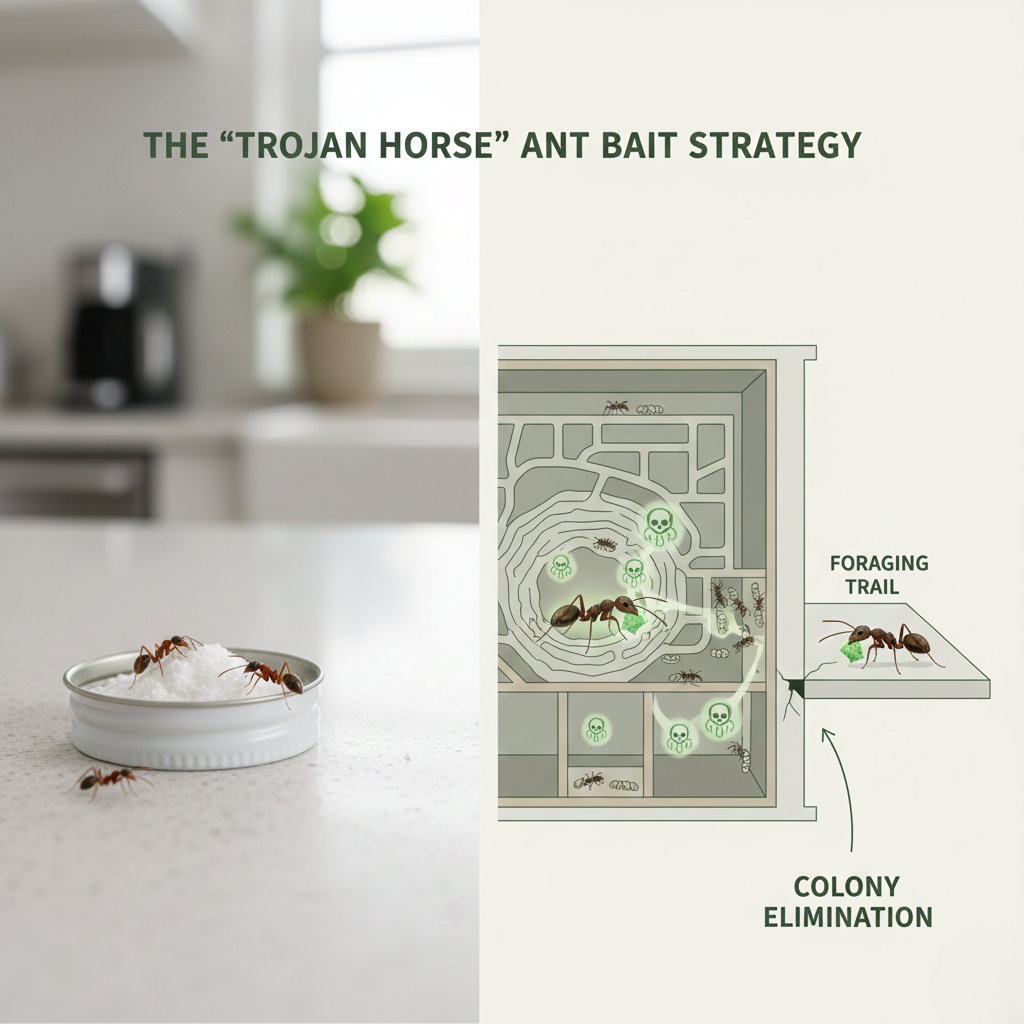
The baking soda method relies on the colony’s social feeding structure to work effectively.
Common Mistakes to Avoid
- Using Granulated Sugar: As mentioned, ants are smart. If they can separate the sugar from the baking soda, they will.
- Cleaning the Trail Too Soon: It is tempting to bleach the ant trail. Resist! If you destroy the pheromone trail, the ants won’t find your baking soda sugar ants bait.
- Getting the Bait Wet: Moisture can deactivate the baking soda and make the sugar a clumpy mess. Keep your bait dry.
Professional Advice for Lasting Results
Eliminating ants is often a two-part process: removing the current colony and sealing the home to prevent the next one. While the sugar ants baking soda method is incredibly effective for active trails, a recurring problem usually points to a structural gap in your home’s perimeter.
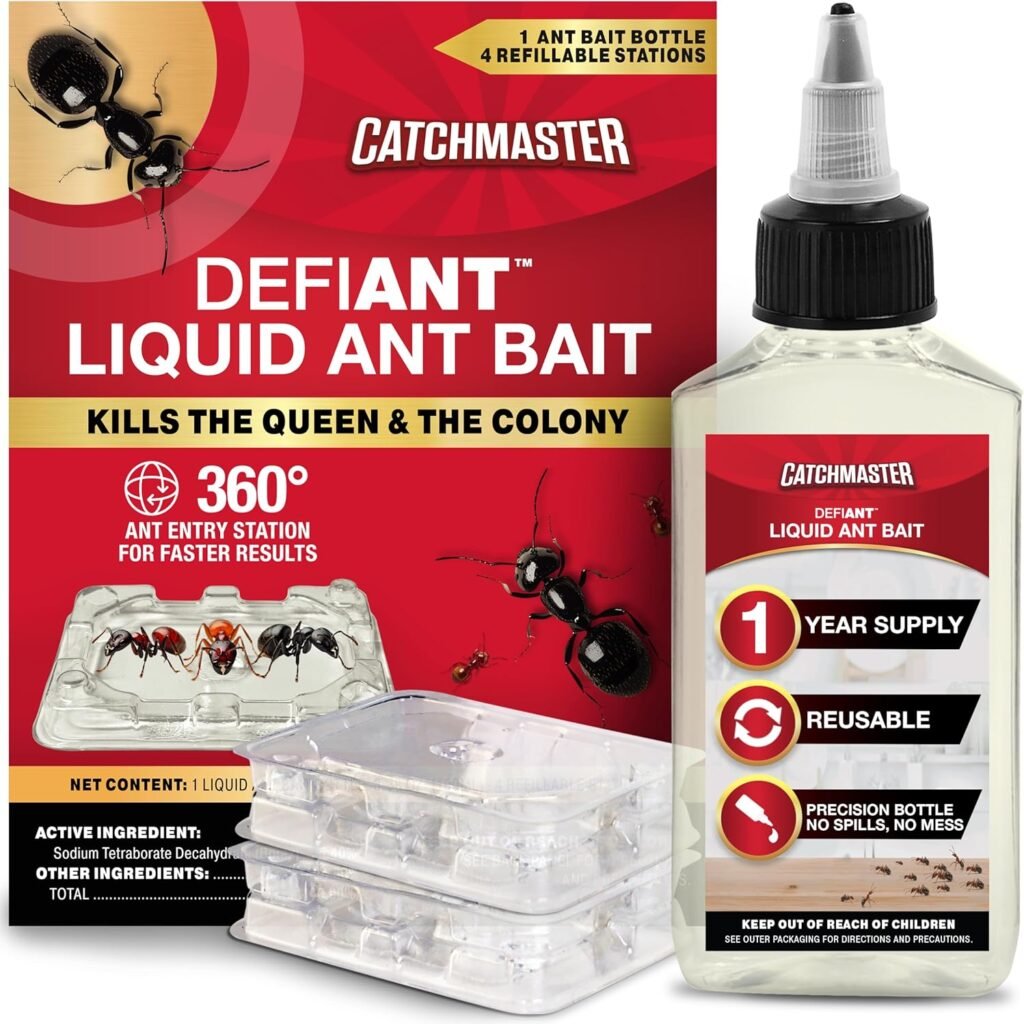
Advion is widely considered the most effective ant killer on the market. It uses Indoxacarb, which allows ants to remain active long enough to return to the nest and share the bait. It is specifically formulated to be irresistible to “sugar-seeking” ants
FAQ Section
How long does it take for baking soda to kill sugar ants?
You will typically see a decrease in ant activity within 48 to 72 hours. It takes time for the foragers to bring the bait back to the nest and for the internal gas reaction to take effect.
Can I add water to make a paste?
Yes. Some species of “sugar ants” prefer liquid or paste-like sweets. If they ignore the dry powder, add a few drops of water or honey to your sugar ants baking soda mix to create a thick paste.
Will this work on fire ants or carpenter ants?
This method is specifically designed for smaller “sugar-seeking” ants. Fire ants are aggressive and require different treatments, and Carpenter ants may require a protein-based bait rather than just sugar.
Is it safe to put baking soda on my carpet?
Yes, baking soda is a natural deodorizer. However, for ant control, it is better to keep the mixture in a small container to avoid a messy cleanup and to keep the bait concentrated.
Does vinegar work better than baking soda?
Vinegar is a great repellent (it cleans the trails), but it does not kill the colony. Use vinegar to clean up after the baking soda sugar ants bait has already done its job.
Conclusion
The sugar ants baking soda method is a testament to the power of simple, natural solutions. By leveraging the biological weaknesses of these tiny invaders, you can protect your pantry and your kitchen surfaces without resorting to harsh chemicals.
To recap, ensure you use a 1:1 ratio of baking soda and powdered sugar, place your baits strategically along active pheromone trails, and have patience while the workers carry the bait back to the queen. With a little consistency and the right ingredients, you can reclaim your home and enjoy a clean, ant-free kitchen once again.