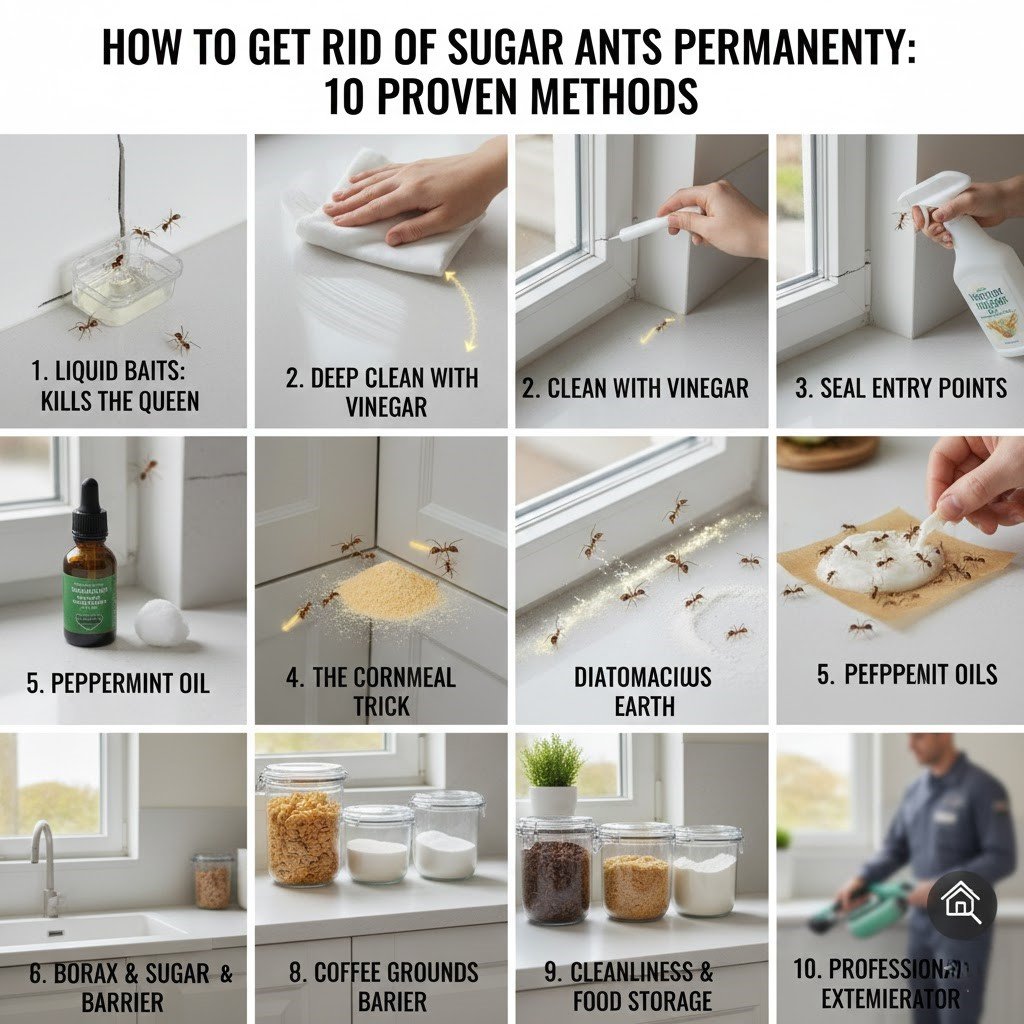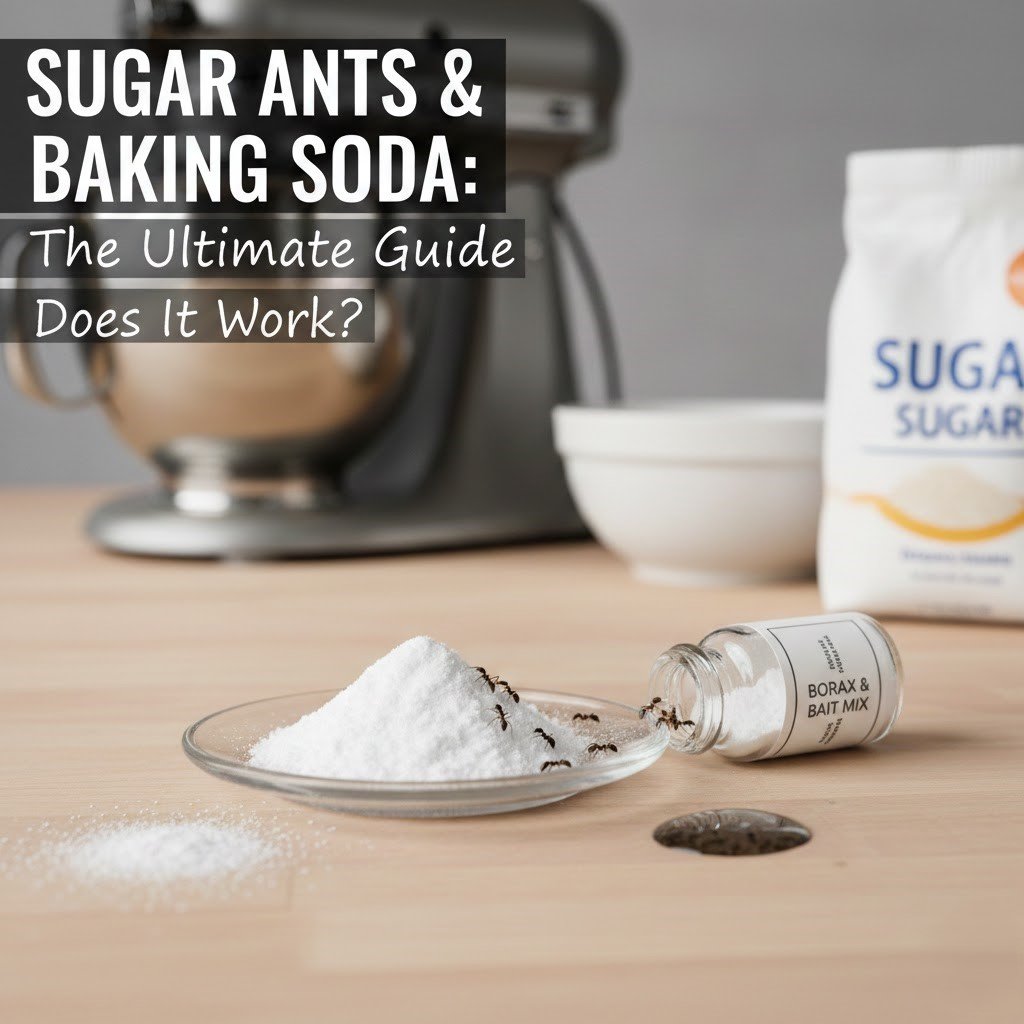
Seeing a single ant on your kitchen island might not seem like a crisis, but in the world of urban pests, one scout is a herald for thousands. If you are currently staring at a frantic line of insects near your sink, you need to know how to kill sugar ants effectively without causing the colony to scatter and multiply. The term “sugar ant” is a broad label for several species—such as the odorous house ant or the pavement ant—that share a common trait: an insatiable drive to find sweets and moisture inside your home.
To successfully kill sugar ants, you must move beyond the “squish-on-sight” mentality. While killing individual ants provides temporary satisfaction, it does nothing to address the thousands of eggs and the multiple queens hidden deep within your walls. This guide explores the science of ant elimination, providing you with a tactical roadmap to destroy the nest and secure your perimeter.
Understanding the Enemy: Why “Direct Killing” is a Strategy
When people ask how kill sugar ants most effectively, they are often looking for a way to stop the immediate nuisance. However, direct killing methods must be applied with precision. Ants communicate through chemical signals called pheromones. If you use a harsh, repellent spray on a trail, you disrupt their communication, but you also alert the colony to a threat.
Many sugar ant species respond to this threat through “budding,” where the colony splits into several smaller, harder-to-reach nests. Therefore, the “how” of killing them matters just as much as the “what.”
The Biology of the Trail
- Scouts: These are the pioneers. They wander aimlessly until they find a food source.
- Recruiters: Once food is found, the scout returns to the nest, laying a pheromone trail.
- Foragers: These are the ants you see in your kitchen. They follow the trail to harvest the food.
Method 1: The Baiting Strategy (The “Trojan Horse” Approach)
If you want to know how to kill sugar ants at the source, baiting is the gold standard. Instead of killing the ant instantly, you provide a toxic meal that they carry back to the queen.
Why Baits Work
Sugar ants are social feeders. They perform trophallaxis, which is the mouth-to-mouth transfer of liquid food. When a worker consumes a slow-acting liquid bait, she doesn’t just die in your kitchen. She returns home and feeds that poison to the larvae and the queen.
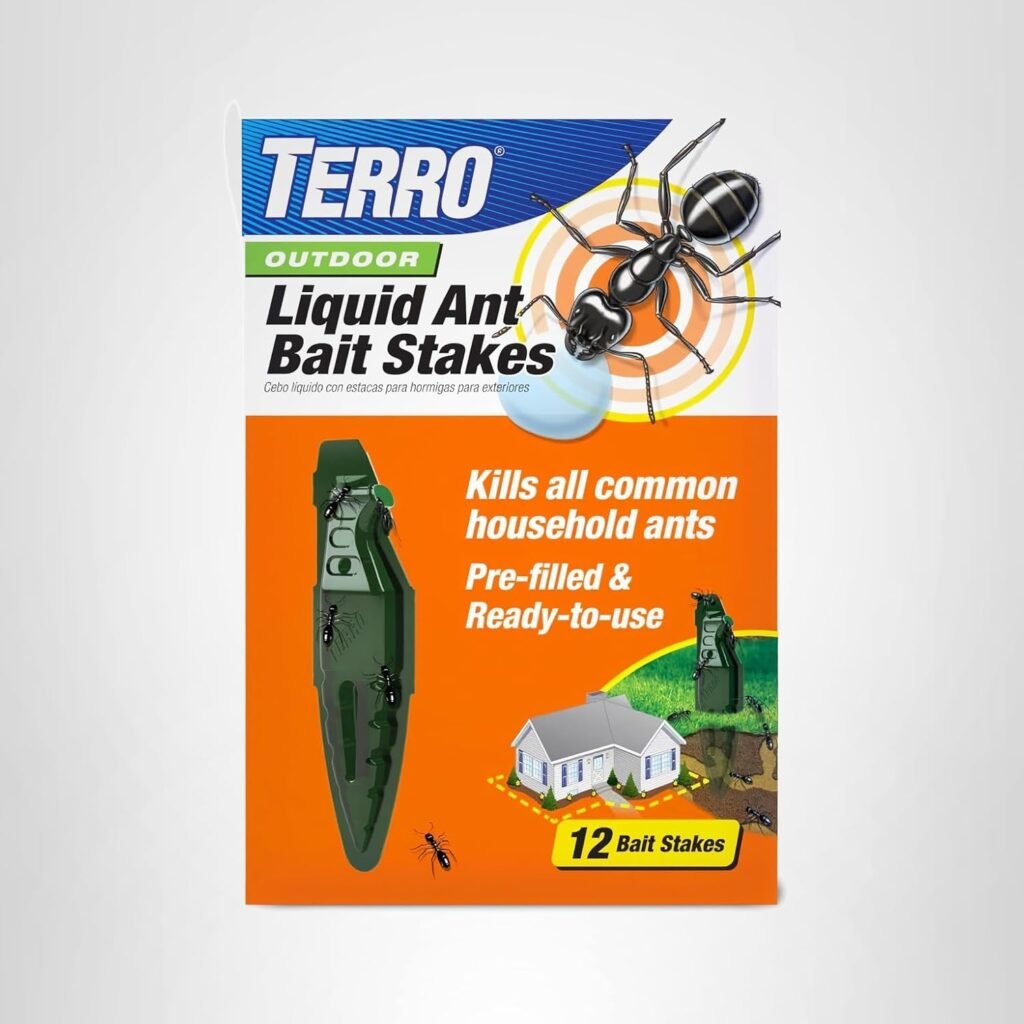
Best Practices for Baiting
- Don’t Clean the Trail: It sounds counterintuitive, but if you want to kill sugar ants, you need them to find the bait. Leave the trail intact.
- Place Bait Near Entry Points: Put stations where the ants enter, such as near window sills or under the sink.
- Be Patient: You will see more ants initially. This is a good sign—it means the recruitment signal is working.
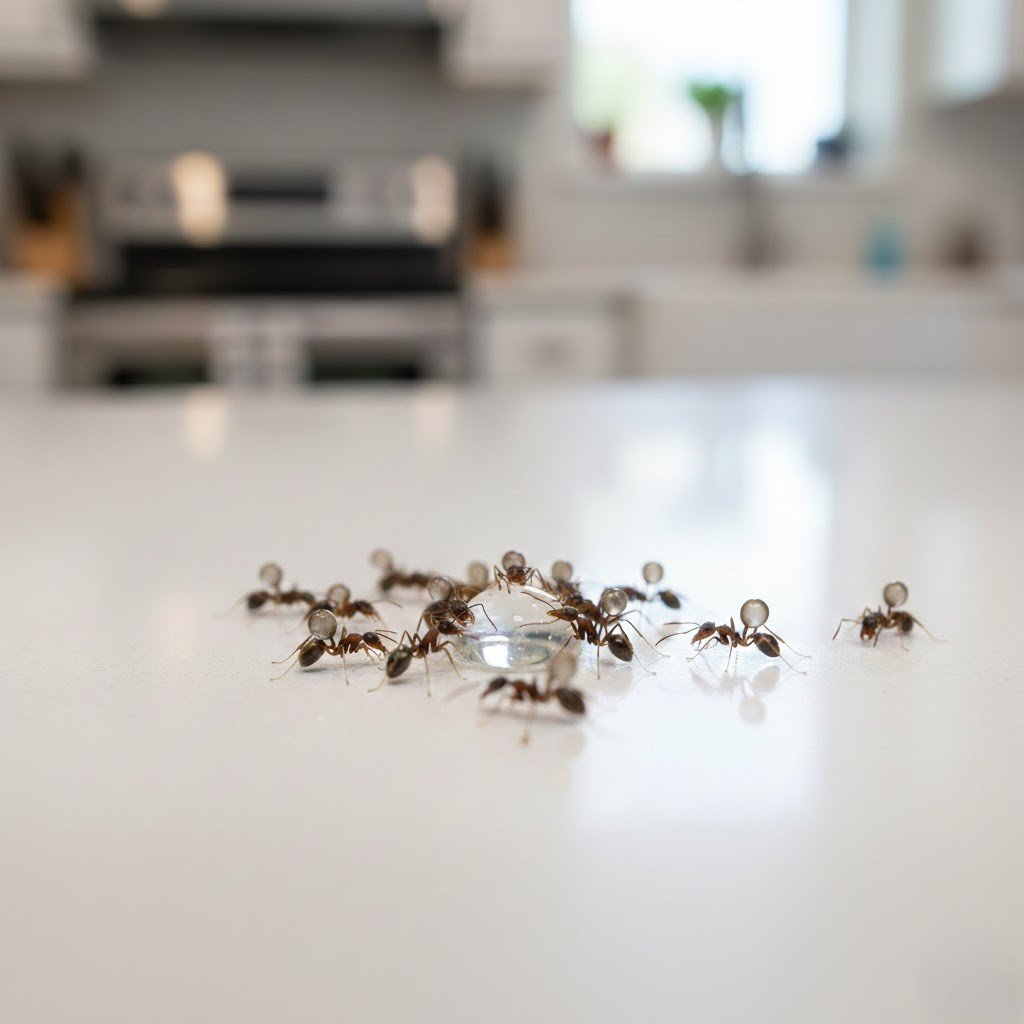
Effective baiting relies on the ants’ natural social feeding habits to transport toxins to the heart of the colony.
Method 2: Non-Repellent Sprays and Foams
When DIY baits aren’t enough, professional-grade non-repellent sprays are the next step in how to kill sugar ants. Unlike standard grocery store bug sprays, these are “invisible” to ants.
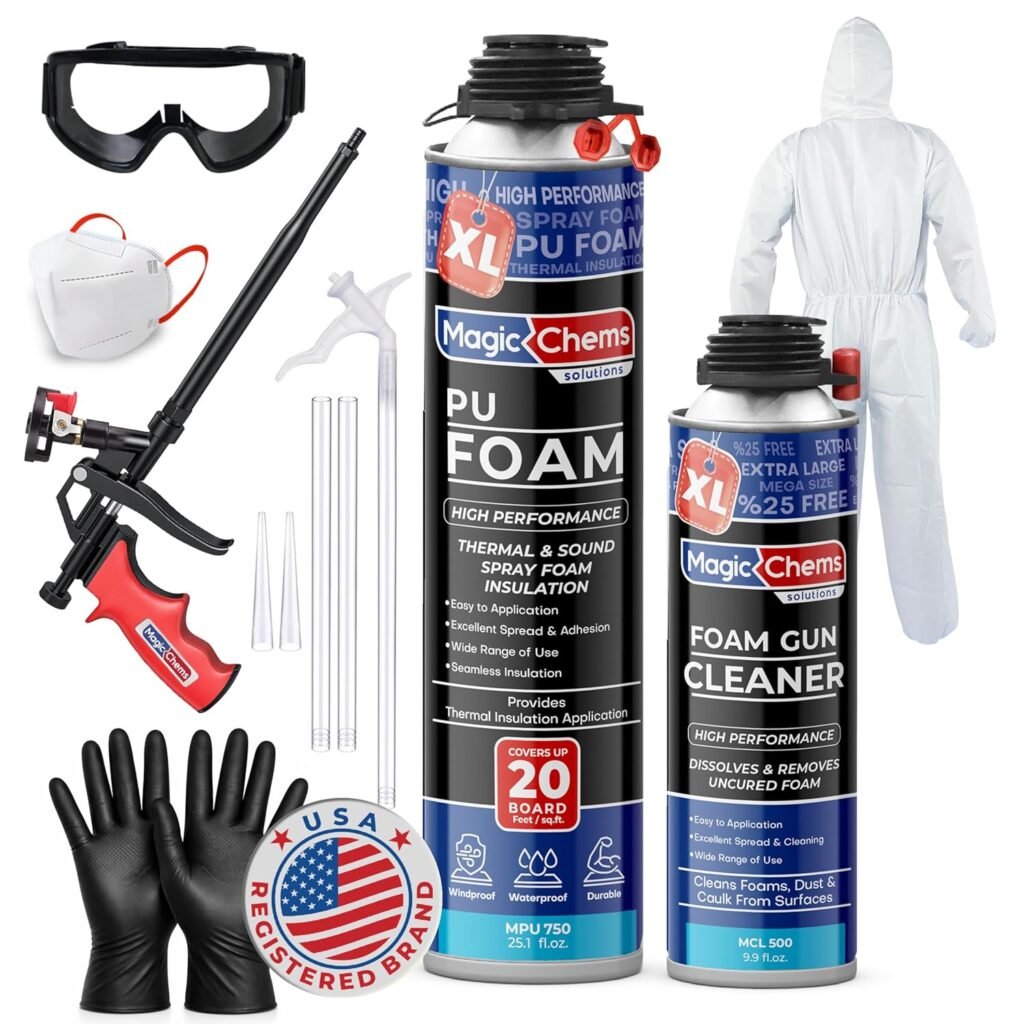
- How They Work: Ants walk through the treated area without realizing it. The chemical hitches a ride on their legs and bodies.
- The Transfer Effect: As the ants groom each other in the nest, the chemical spreads throughout the population.
- Where to Apply: Use these along baseboards, behind appliances, and around the exterior foundation.
Method 3: Natural and Home Remedies
For those looking for how kill sugar ants without synthetic chemicals, several household items can be used to create an inhospitable environment or to kill scouts directly.
The Vinegar Solution
A 50/50 mix of white vinegar and water is the ultimate tool for pheromone disruption. While it doesn’t always kill the nest, it “blinds” the ants by dissolving their scent trails, preventing them from finding their way back to your food.
Diatomaceous Earth (DE)
Food-grade Diatomaceous Earth is a mechanical killer. To the human touch, it feels like flour. To an ant, it is like walking over broken glass. It cuts through their waxy exoskeleton, causing them to dehydrate and die.
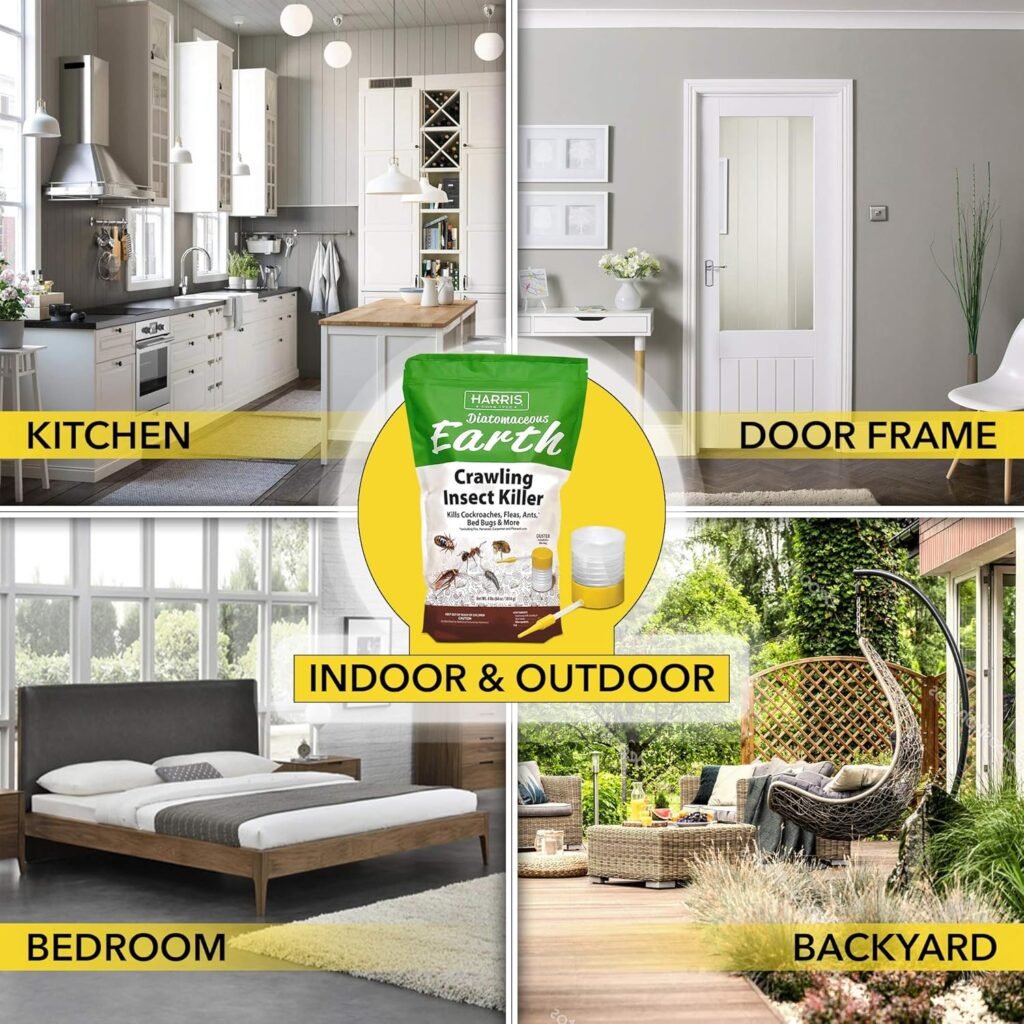
- Best for: Cracks, crevices, and wall voids.
- Pro Tip: Apply a very thin layer. If you pile it up, the ants will simply walk around it.
Borax and Sugar Paste
A classic DIY method for how to kill sugar ants involves mixing 1 part Borax with 3 parts powdered sugar and a little water.
- The Science: Sugar attracts them; Borax interferes with their digestive system once ingested.
Comparison of Killing Methods
| Method | Speed of Kill | Target | Best For… |
| Aerosol Sprays | Instant | Individual Foragers | Emergency “spot” treatment only. |
| Liquid Baits | 3–7 Days | The Entire Colony | Kitchen and pantry infestations. |
| Diatomaceous Earth | 24–48 Hours | Scouts/Foragers | Long-term barrier in dry areas. |
| Non-Repellent Spray | 5–10 Days | Colony + Queen | Serious or recurring infestations. |
Step-by-Step Guide: Your 48-Hour Elimination Plan
Hour 1: Identification and Placement
Identify the trail. Place your bait stations directly in the path. Do not use any cleaning agents in this area for the time being.
Hour 12: The Swarm
You will likely see a heavy increase in ant activity. This is the “feeding frenzy.” Ensure the bait stations remain full; if they are dry, the ants will leave.
Hour 24: The Taper
You should begin to see a decrease in the number of ants. This indicates that the toxin is beginning to circulate within the nest.
Hour 48: The Clean-Up
Once the activity has stopped, use your vinegar solution to deep-clean the area. This removes the “food here” signals that could attract a different colony in the future.
Common Mistakes When Trying to Kill Sugar Ants
If you’ve tried to kill sugar ants before and failed, you likely fell into one of these traps:
- Using Repellents Near Baits: If you spray a “barrier” spray near your bait, the ants will never reach the bait.
- Leaving Other Food Out: Ants are opportunistic. If there is a spilled soda next to your bait, they might choose the soda.
- Killing the “Lead” Ants: If you kill the scouts before they return to the nest, the colony never learns about the bait.
For more information on the environmental impact of various treatments, the National Pesticide Information Center provides science-based data on household pest control.
Structural Prevention: Closing the Door
Knowing how to kill sugar ants is only half the battle. If your home has structural “leaks,” new colonies will simply move into the vacant space left by the old ones.
- Caulk the Gaps: Focus on where utility lines enter the house and the corners of window frames.
- Manage Moisture: Sugar ants love damp wood and standing water. Fix leaky faucets and ensure your crawl space is dry. Refer to our comprehensive home sealing guide for a room-by-room breakdown.
- Landscaping: Keep mulch and wood piles at least 20 feet away from your foundation.
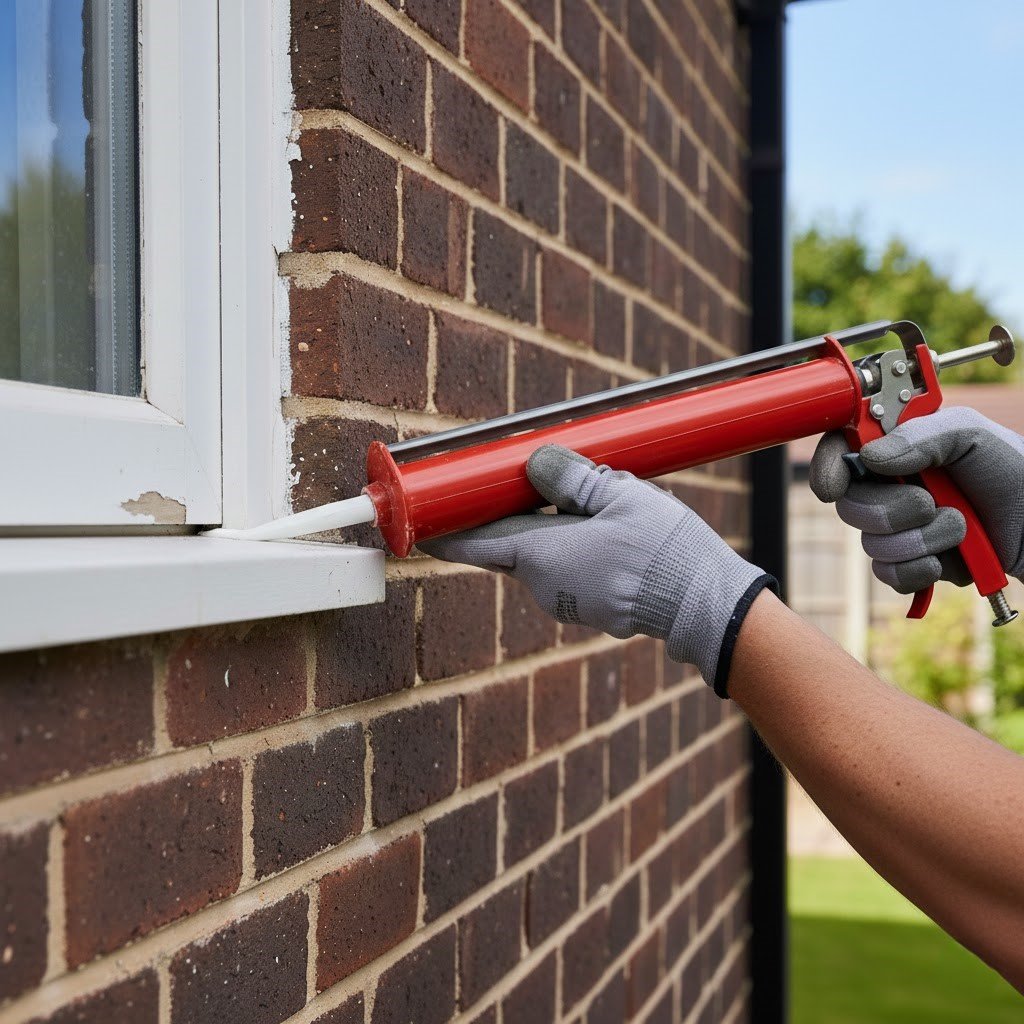
Permanent ant control requires sealing the physical entry points that allow scouts to enter your home.
Expert Assistance for Persistent Problems
Managing a home can feel like an endless cycle of maintenance and troubleshooting. When an ant problem moves from a nuisance to a full-scale invasion, it can be overwhelming. You shouldn’t have to spend your weekends playing “detective” with insect trails. Whether you need a one-time solution or a long-term strategy to protect your property value and peace of mind, professional insight is invaluable.
FAQ: Killing Sugar Ants
Can I kill sugar ants with just soapy water?
Yes, a mixture of dish soap and water will kill ants on contact by breaking down their surface tension and suffocating them. However, like vinegar, it only kills the ants you see and does nothing to eliminate the nest hidden in your walls.
Why do I have sugar ants in the winter?
If you see ants in the winter, they likely have a nest inside your home’s structure (like in a heated wall void). They aren’t coming from outside; they are already living with you, and the warmth of your home keeps them active year-round.
Is it better to use liquid or solid bait?
For sugar ants, liquid bait is almost always superior. These ants primarily feed on liquids (like nectar and honeydew in nature), and they can consume and transport liquid bait much more efficiently than solid granules.
How do I kill sugar ants without harming my pets?
Use enclosed bait stations that are tamper-resistant, or use food-grade Diatomaceous Earth in areas where pets cannot reach, such as behind the dishwasher or inside wall voids. Always read the label of any product to ensure it is rated for use in homes with animals.
Does cinnamon actually kill sugar ants?
Cinnamon does not kill ants. It acts as a strong repellent because the fine powder irritates their sensory receptors. While it might divert a trail for a few hours, the ants will eventually find a way around it or over it.
How long does it take to kill the queen?
Depending on the size of the colony and the type of bait used, it typically takes between 5 to 14 days to fully eliminate the queen and the reproductive core of the nest.
Conclusion
Learning how to kill sugar ants is an exercise in strategy over brute force. While it is tempting to reach for the nearest can of spray the moment you see a trail, the most successful homeowners are those who use the ants’ own biology against them. By employing slow-acting baits, disrupting pheromone trails with vinegar, and sealing physical entry points, you create a multi-layered defense that is difficult for any colony to overcome.
The process is simple:
- Identify the specific trails.
- Bait the workers to reach the queen.
- Disrupt the scent trails to prevent re-entry.
- Seal the home to ensure long-term protection.
With these methods in hand, you can confidently eliminate your current infestation and ensure your kitchen remains a clean, ant-free zone.