
If you’ve noticed a sudden trail of microscopic specks moving toward your fruit bowl, you are likely dealing with tiny sugar ants. These pests are a common household grievance, yet many people struggle to identify them accurately because of their diminutive stature. Proper identification is the first and most critical step in pest management; after all, treating for one species when you actually have another is a recipe for a recurring infestation.
Understanding tiny sugar ants requires looking past their size. While they all seem like “small black bugs” at a glance, their physical characteristics, movement patterns, and nesting habits vary significantly. In this comprehensive guide, we will answer the question: what do sugar ants look like? We will explore their physical dimensions, color variations, and the specific markers that separate them from other common household invaders.
What Do Sugar Ants Look Like?
To the naked eye, a sugar ant looks like a moving grain of pepper. However, under closer inspection, these insects reveal a complex anatomy. Most homeowners are actually seeing one of several species, such as the Odorous House Ant or the Pharaoh Ant.
Key Physical Characteristics
When asking what do sugar ants look like, look for these three defining features:
- Segmented Bodies: Like all insects, they have a head, thorax, and abdomen. The waist (petiole) between the thorax and abdomen usually has one or two small nodes or “humps.”
- Antennae: They possess elbowed antennae that are highly sensitive to pheromones and sugar particles.
- Coloration: Most vary from a translucent yellow or light brown to a deep, brownish-black.
Size Matters: How Small is “Tiny”?
The size of tiny sugar ants is their most defining trait. Most worker ants you encounter in a residential setting range from 2mm to 4mm in length ($1/16$ to $1/8$ of an inch). To put this in perspective, you could fit nearly ten of these ants end-to-end on a single United States penny.
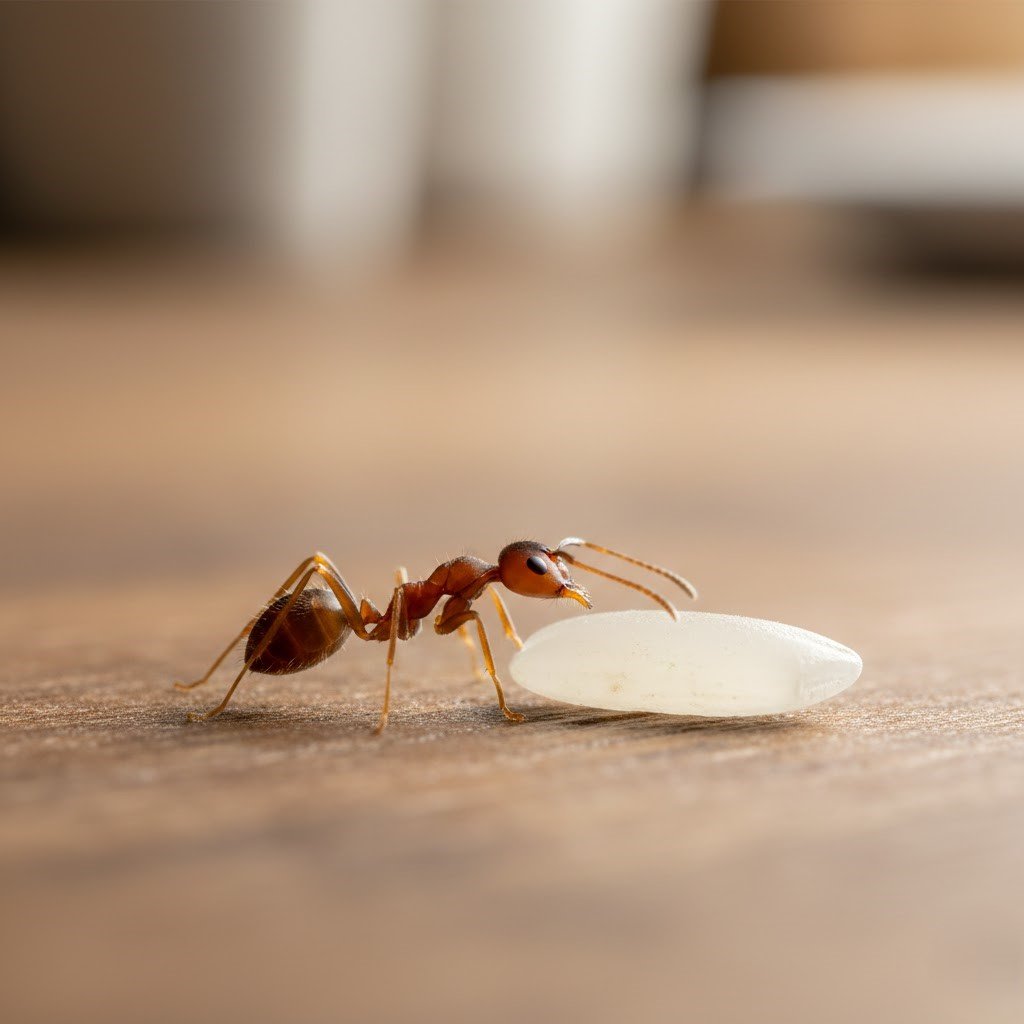
The size of tiny sugar ants makes them experts at entering homes through even the most microscopic cracks in window seals.
Common Species Often Called “Tiny Sugar Ants”
“Sugar ant” is a colloquial term rather than a scientific classification. Depending on your geography and the specific what do sugar ants look like markers you observe, you are likely dealing with one of the following:
1. The Odorous House Ant (Tapinoma sessile)
These are perhaps the most common invaders. They are dark brown to black and are famous for the “rotten coconut” smell they emit when crushed.
- Size: $2.4$ to $3.3$ mm.
- Visual Marker: Their thorax is uneven in shape when viewed from the side.
2. The Pharaoh Ant (Monomorium pharaonis)
These are much lighter in color, often appearing almost transparent or yellow-red.
- Size: Very small, roughly $1.5$ to $2$ mm.
- Visual Marker: They have two nodes at the waist and distinct black shading on the back of the abdomen.
3. The Little Black Ant (Monomorium minimum)
True to their name, these are jet black and shiny.
- Size: Extremely tiny, often less than $2$ mm.
- Visual Marker: A highly reflective, sleek exoskeleton.
Identifying Tiny Sugar Ants vs. Lookalikes
One of the biggest risks in home maintenance is misidentifying tiny sugar ants for more destructive pests like carpenter ants or subterranean termites.
| Feature | Tiny Sugar Ants | Termite Swarmers | Carpenter Ants |
| Waist | Pinched/Segmented | Broad/Thick | Pinched with one node |
| Antennae | Elbowed (L-shaped) | Straight/Beaded | Elbowed |
| Wings | Rare (only swarmers) | Two equal pairs | Two unequal pairs |
| Size | $2$–$4$ mm | $6$–$10$ mm | $6$–$13$ mm |
If you see wings, you are likely looking at a reproductive “swarmer.” While sugar ants do swarm, if the wings are twice the length of the body and equal in size, you may be facing a termite issue, which requires immediate professional intervention.
Where to Spot Them: Behavioral Clues
Because they are so small, you often find tiny sugar ants by looking for their activity rather than the insects themselves. They are incredibly social, meaning they are rarely alone.
- The “Conga Line”: They move in distinct, disciplined lines. This is due to pheromone trails laid by scouts.
- Moisture Seekers: You will often find them around kitchen sinks, leaky pipes, or even inside the “sweat” of a cold soda can.
- Electrical Attraction: Some species, like the Raspberry Crazy Ant (which can be confused with sugar ants), are attracted to electrical currents and may congregate inside outlets or appliances.
The Inspection Checklist
If you suspect you have tiny sugar ants, check these specific locations:
- Behind the baseboards under the kitchen sink.
- Inside the pantry, specifically around honey jars or syrup bottles.
- The edges of windowsills where moisture might accumulate.
- Underneath indoor potted plants.
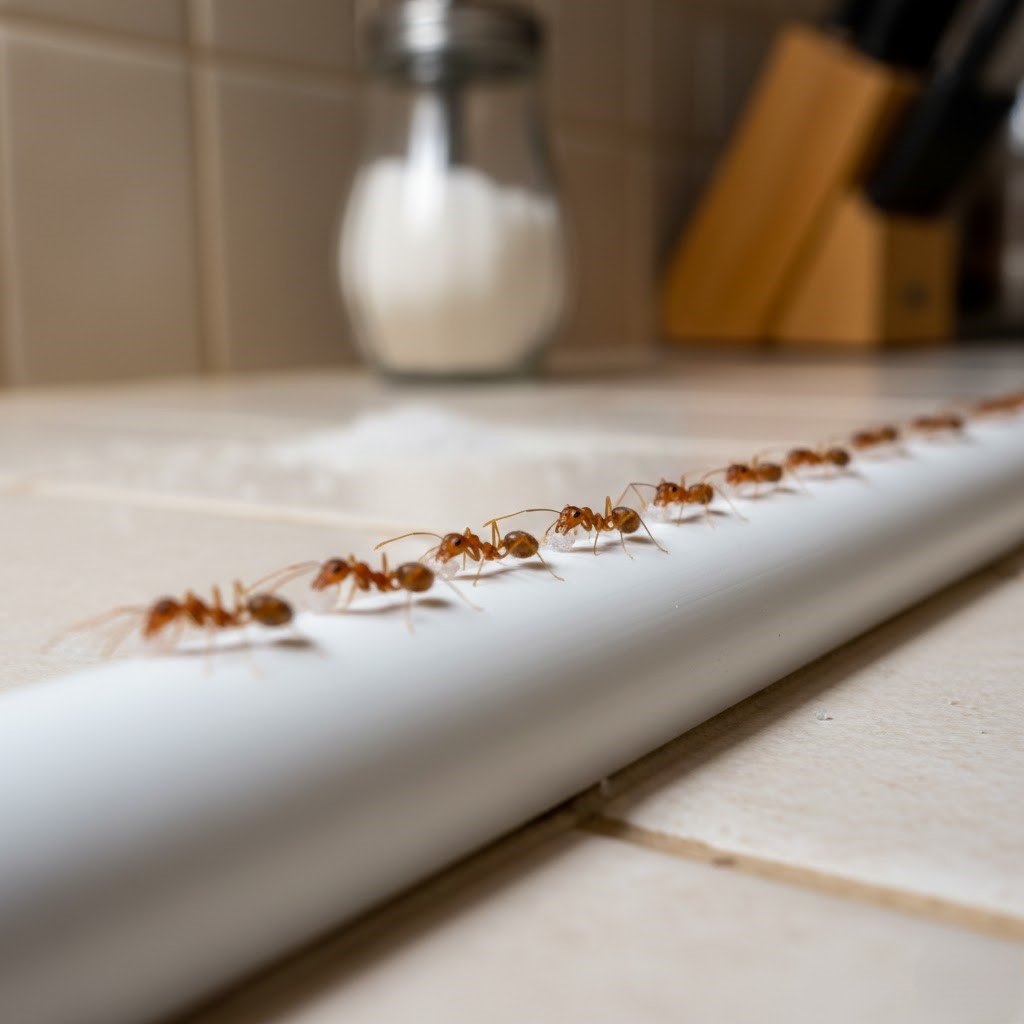
Sugar ants prefer following “edges” and corners, making them easier to spot along baseboards and counter lips.
The Anatomy of an Infestation
When you see tiny sugar ants in your living space, you are only seeing the workers. A successful colony consists of:
- The Queen: Larger than the workers, she stays hidden in the nest and is responsible for all egg production.
- The Larvae: Small, white, grub-like forms that require constant protein and sugar to grow.
- The Workers: The sterile females you see foraging in your kitchen.
Understanding this hierarchy is vital. If you only focus on “what do sugar ants look like” to kill the ones you see, the queen will simply produce more. Total elimination requires a strategy that targets the nest based on the species’ specific habits. For more on the long-term structural impact of household pests, you can explore our home maintenance and protection resources.
Why Identification is Your Best Defense
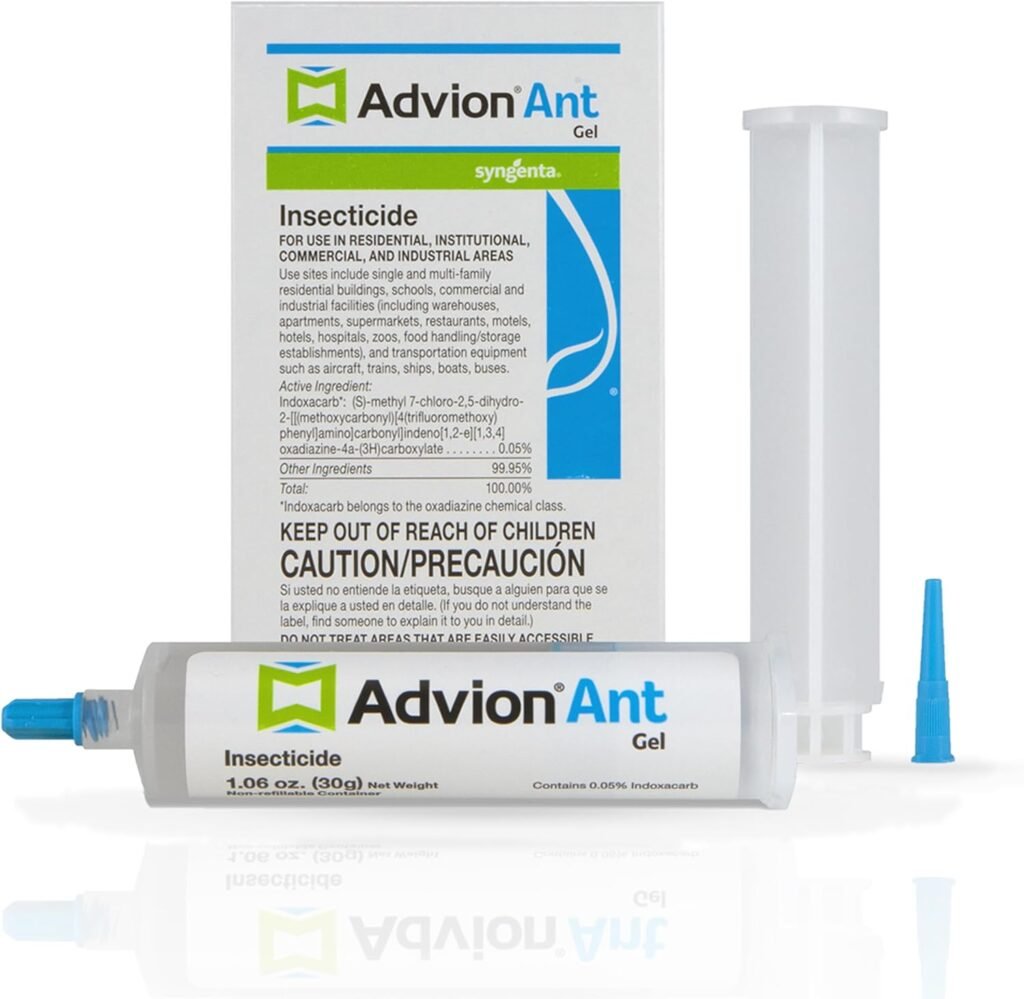
Knowing the answer to what do sugar ants look like prevents you from wasting money on ineffective treatments. For example, Pharaoh ants are notorious for “budding.” If you identify them correctly, you’ll know not to use repellent sprays, which would cause the colony to split into ten new ones. Instead, you would use a slow-acting bait that they share with the queen.
Proper identification also helps you determine the source. If the ants are jet black and shiny, they likely came from a nest in the soil outside. If they are yellow and translucent, they might be nesting in your wall voids or behind your wallpaper.
Expert Guidance for Your Property
Maintaining a home is about more than just aesthetics; it is about protecting your sanctuary from the small things that can cause big stress. When you are faced with a persistent pest problem or structural questions that feel overwhelming, you don’t have to navigate it alone. Our mission is to provide homeowners with the clarity and professional connections they need to handle any household challenge with confidence.
FAQ: Identifying Tiny Sugar Ants
Are sugar ants the same as grease ants?
Not exactly. While they look similar, “sugar ants” prefer sweets (glucose), whereas “grease ants” (Protein Ants) prefer fats and oils. However, many species are opportunistic and will switch between the two depending on the needs of the colony.
Do tiny sugar ants have wings?
Only the “reproductives” (future queens and males) have wings. You will usually only see winged sugar ants during a “nuptial flight,” which typically happens in the spring or summer when the colony is looking to expand.
Why are the ants in my house different colors?
This is usually because you have more than one species, or you are seeing ants at different stages of their life cycle. Newly hatched ants (callows) are often lighter in color before their exoskeleton fully hardens and darkens.
Can I see sugar ant eggs?
It is very unlikely. The queen keeps the eggs deep within the nest in a protected, high-humidity environment. If you see white, rice-like specs being carried by ants, those are likely larvae or pupae being moved to safety.
Do tiny sugar ants bite?
Most species of tiny sugar ants are too small to bite humans effectively. While they have mandibles, they are designed for carrying food particles and grooming. They are considered a nuisance pest and a food-contamination risk rather than a physical threat.
Read More Guides: Professional Pest Control Secrets: How To Kill Sugar Ants Fast
Conclusion
Identifying tiny sugar ants is more than a curiosity; it is a necessity for a clean and healthy home. By observing their size ($2$–$4$ mm), their color (ranging from translucent yellow to black), and their disciplined trailing behavior, you can accurately answer the question: what do sugar ants look like?
Once you have identified the intruder, you can move from a state of frustration to a state of action. Remember that these ants are evidence of a larger colony nearby. Use your identification skills to choose the right baits, seal the correct cracks, and protect your pantry from future invasions.
Your next steps:
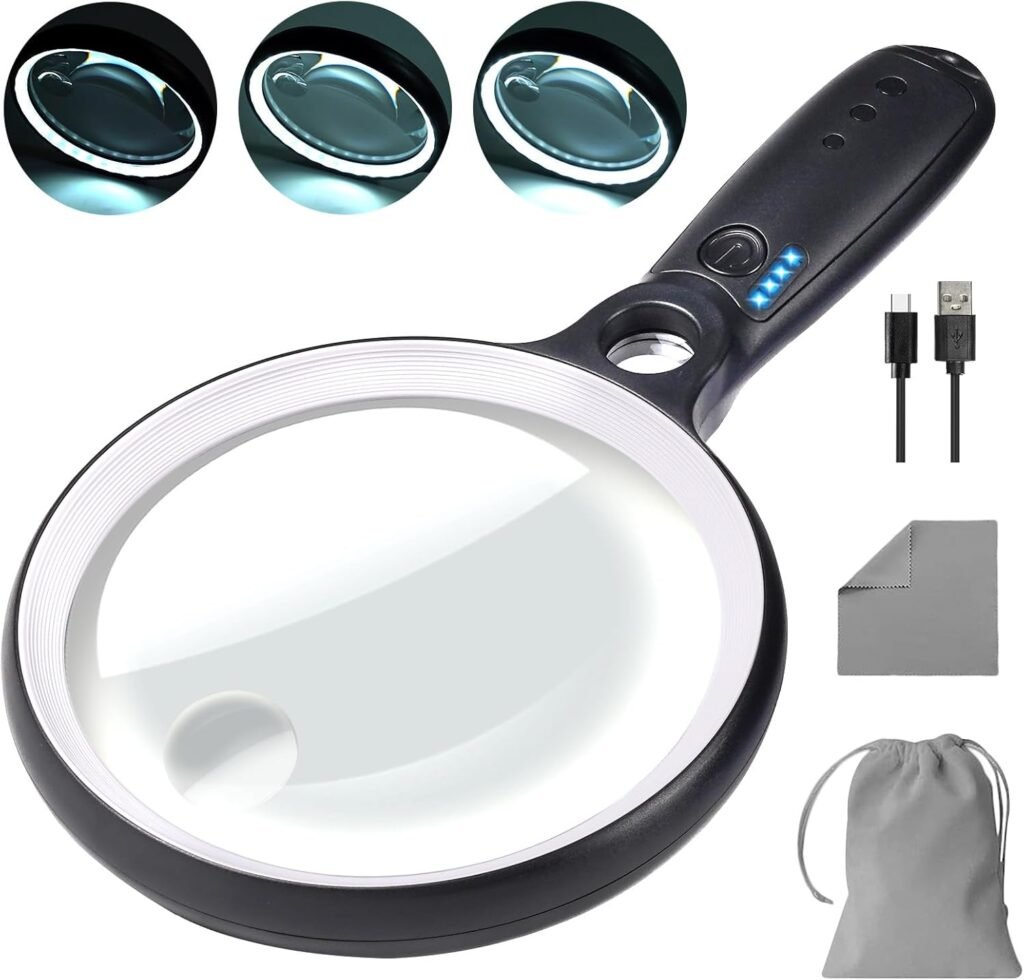
- Examine the trail with a magnifying glass to check for nodes.
- Observe their food preference (are they on the honey or the ham?).
- Check moisture points like sinks and windows.
- Seal the entry points once the identification is confirmed.
By staying vigilant and informed, you can ensure that these tiny invaders remain exactly where they belong—outside.