Finding a trail of tiny black insects marching across your kitchen counter is enough to make any homeowner’s skin crawl. These “sugar ants”—a common term for several species of small, sweet-seeking ants like Odorous House Ants—are persistent, prolific, and frustratingly hard to get rid of. If you are currently dealing with a scout or a full-blown colony, you’re likely asking one question: what repels sugar ants effectively without turning your home into a chemical wasteland?
Understanding what drives these pests and how to disrupt their biology is the key to reclaiming your space. This guide covers everything from natural deterrents to structural fixes to ensure your home remains an ant-free zone.
Why Sugar Ants Are So Attracted to Your Home
Before we dive into what repels them, we have to understand the “why.” Sugar ants aren’t just looking for sugar; they are looking for reliable resources. A single drop of spilled soda or a crumb of a cookie is a beacon for a scout ant. Once a scout finds food, it leaves a pheromone trail—an invisible chemical “road” that tells the rest of the colony exactly where to go.
The Role of Pheromones
If you kill the ants you see but don’t address the trail, more will simply follow the scent. To truly repel sugar ants, you must break the scent communication and make your home an inhospitable environment.
What Repels Sugar Ants? 12 Effective Solutions
1. White Vinegar: The Ultimate Scent Eraser
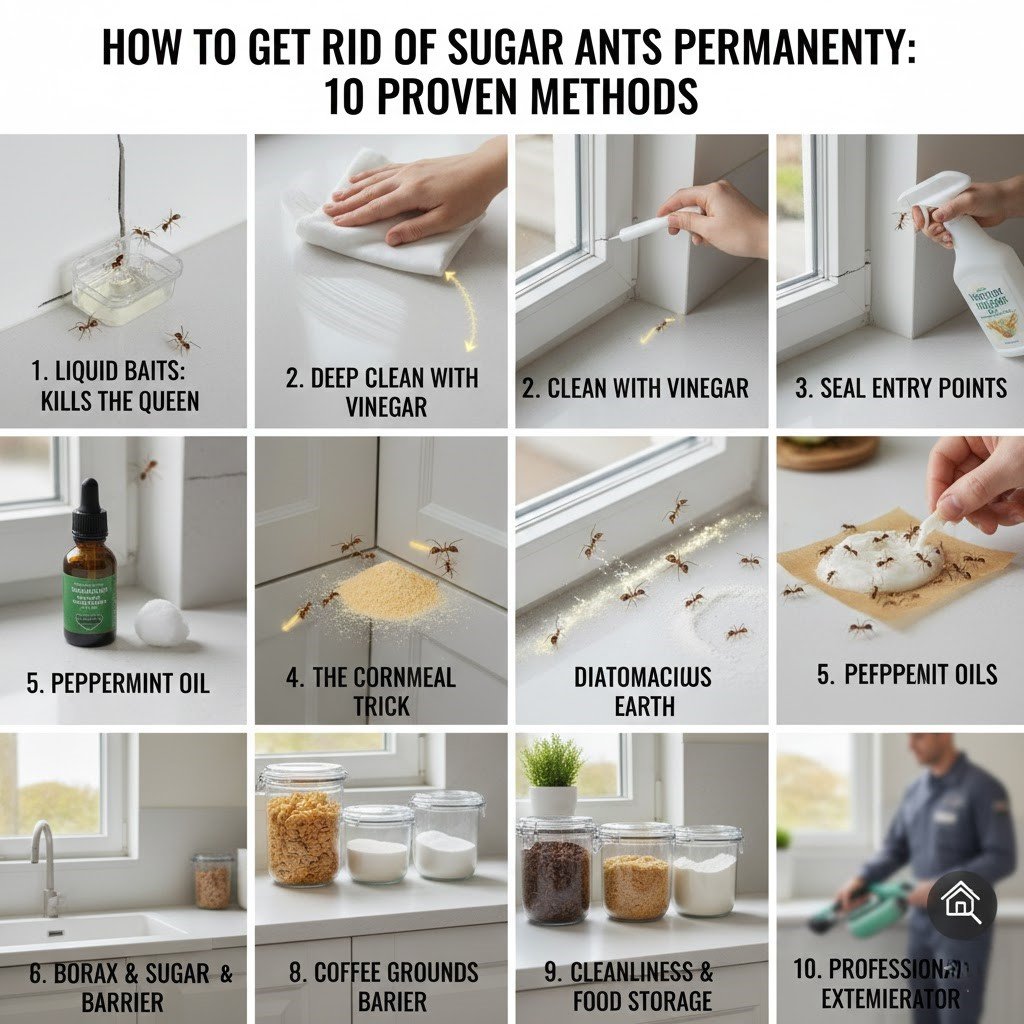
White vinegar is perhaps the most effective DIY tool for repelling sugar ants. Its strong acidity doesn’t just annoy ants; it destroys their pheromone trails.
- How to use it: Mix a 50/50 solution of white vinegar and water in a spray bottle. Spray it directly on counters, baseboards, and known entry points.
- Pro Tip: Let the solution air dry rather than wiping it off immediately to leave a more potent scent barrier.
2. Peppermint Essential Oil
Ants rely heavily on their sense of smell to navigate. The intense aroma of peppermint is overwhelming to them and acts as a natural repellent.
- How to use it: Add 15–20 drops of pure peppermint oil to a cup of water. Spray it around windowsills and doorways. Alternatively, place saturated cotton balls in “hot zones” like under the sink.
3. Diatomaceous Earth (Food Grade)
If you want something that provides a physical barrier, Food Grade Diatomaceous Earth (DE) is the gold standard. This powder is made of fossilized algae with microscopic sharp edges that pierce the exoskeletons of insects, dehydrating them.
- Where to apply: Sprinkle a thin layer behind appliances, inside wall voids, and along the perimeter of your pantry.
4. Lemon and Citrus Juices
Similar to vinegar, the citric acid in lemons masks the scent of ant trails. Furthermore, ants generally dislike the smell of citrus oils found in the rinds.
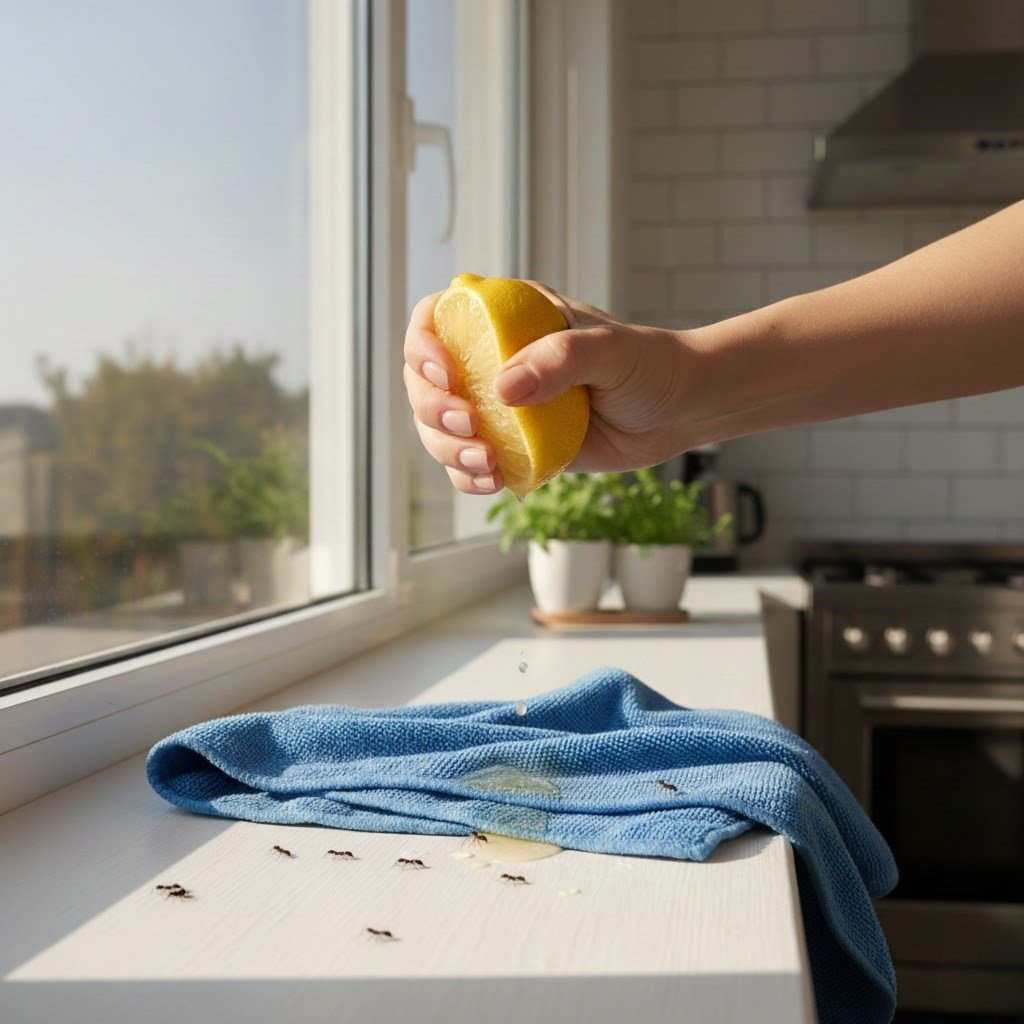
Natural acids in citrus fruits disrupt the chemical signals ants use to find food.
5. Cinnamon and Clove
Cinnamon contains cinnamaldehyde, a compound that is highly irritating to ants. While it won’t kill the colony, a line of cinnamon acts as a “no-cross” zone.
- How to use it: Use cinnamon essential oil for better potency, or sprinkle ground cinnamon at the specific cracks where you see them entering.
6. Coffee Grounds
Don’t throw away your morning brew leftovers. Used coffee grounds are highly aromatic and can be used in your garden or around the exterior of your home to deter ants from approaching the foundation.
7. Tea Tree Oil
Like peppermint, tea tree oil is a potent essential oil that ants find repulsive. However, use caution if you have pets, as tea tree oil can be toxic to cats and dogs if ingested or applied to their skin.
8. Borax and Sugar (The “Trojan Horse”)
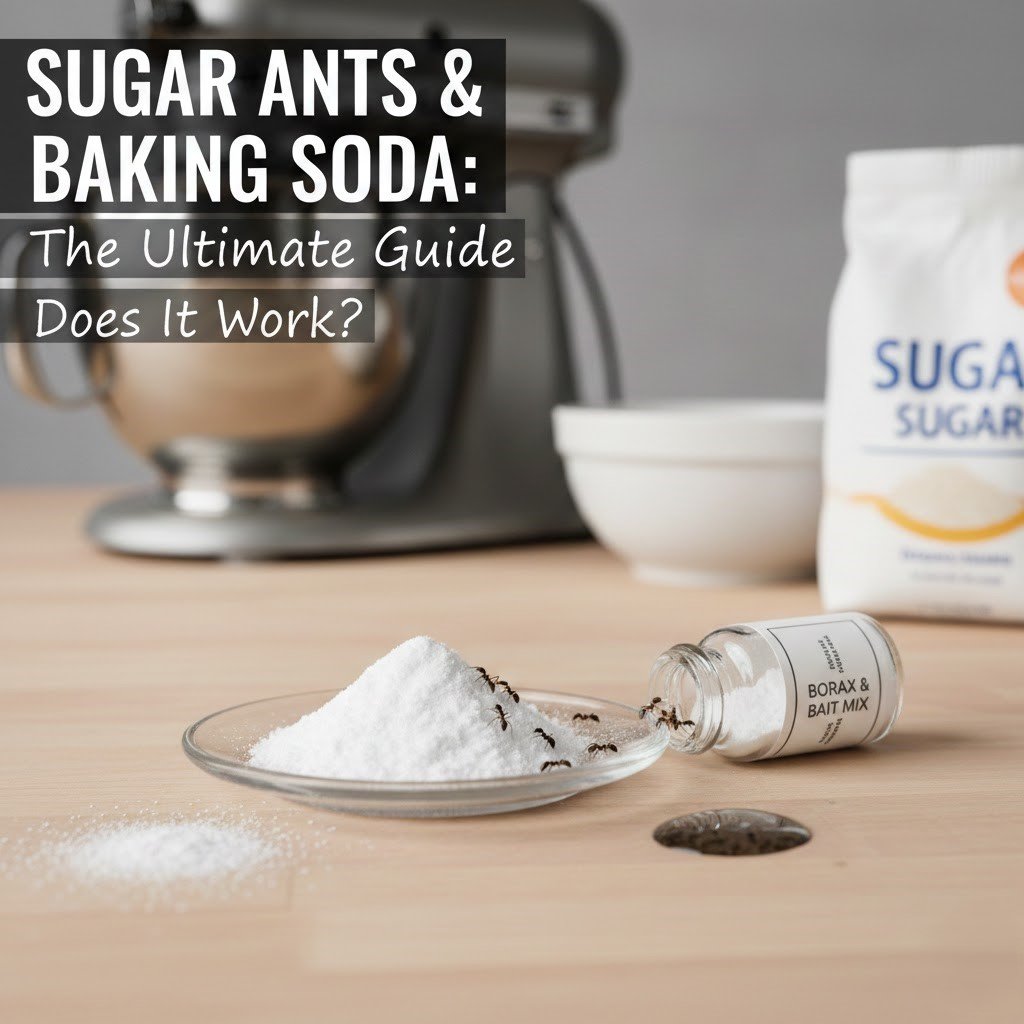
While the other items on this list repel, Borax is used to eliminate. By mixing Borax with sugar and water, you create a bait. The ants are attracted to the sugar, eat the Borax, and carry it back to the queen.
9. Fresh Garlic
The pungent sulfur compounds in garlic are a natural deterrent. Placing peeled cloves near ant entry points can discourage them from entering, though this method is best for garages or basements where the smell won’t bother you.
10. Chalk Barriers
It sounds like an old wives’ tale, but it works temporarily. Ants generally won’t cross a line of chalk because the calcium carbonate interferes with their ability to pick up scents from the ground.
11. Cucumber Peels
Certain types of cucumbers contain compounds that fungi—which some ants feed on—cannot tolerate. Ants instinctively avoid these areas. Bitter cucumbers work best for this.
12. Tea Bags (Mint or Tansy)
If you don’t have essential oils, used mint tea bags placed in corners can provide a mild repellent effect.
How to Prevent Sugar Ants: Long-Term Strategies
Knowing what repels sugar ants is only half the battle. To ensure they don’t return, you must implement a rigorous prevention plan. If you don’t change the environment, you’ll be fighting the same battle every spring.
Seal the Entry Points
Sugar ants are tiny—some are only 1.5 to 3 millimeters long. They can enter through the smallest gap in window caulking or a microscopic tear in a screen.
- Action Step: Inspect your home’s exterior. Use silicone caulk to seal gaps around plumbing, electrical wires, and windows.
Practice “Clean Kitchen” Discipline
This is the most critical step in how to prevent sugar ants. If there is no food, there is no reason for them to stay.
- Store food in airtight containers: Ants can get into cardboard boxes and loosely folded bags. Use glass or hard plastic containers.
- Clean the “Invisibles”: We often clean the counters but forget the honey jar’s sticky bottom or the toaster’s crumb tray.
- Pet food management: Don’t leave pet food out overnight. Use an “ant-proof” bowl that sits in a shallow moat of water.
Moisture Control
Ants aren’t just looking for sugar; they are looking for water. Leaky pipes under the kitchen sink or a damp basement provide the perfect nesting ground.
- Fix leaks immediately.
- Use a dehumidifier in damp areas of the home.
Comparison of Common Repellents
| Repellent | Best For | Longevity | Safety Around Pets |
| White Vinegar | Cleaning & Trail Removal | Low (needs daily use) | High |
| Peppermint Oil | Entry Points | Medium | Medium (Avoid contact) |
| Diatomaceous Earth | Wall Voids/Perimeters | High (if kept dry) | High (Food Grade only) |
| Borax Baits | Colony Elimination | High | Low (Keep away from pets) |
The Limitations of DIY Repellents
While natural repellents are excellent for minor issues, they have limits. If you have a satellite colony living inside your walls, simply spraying peppermint oil on the floor won’t reach the queen. In cases of severe infestation, you may need to combine repellents with professional-grade baits or seek expert help.
According to the National Pesticide Information Center, understanding the specific biology of the ant species you are dealing with is crucial for effective management. For example, some ants prefer proteins over sugars depending on the season.
When to Call a Professional
If you have followed all the steps on how to prevent sugar ants and you are still seeing hundreds of them daily, you may be dealing with a “super-colony.” Signs of a serious problem include:
- Ants appearing in multiple rooms (bathrooms, bedrooms, kitchens).
- Seeing winged “swarmers” (a sign the colony is mature and reproducing).
- Ants returning immediately after you’ve cleaned and treated the area.
If you find yourself overwhelmed by a persistent infestation, don’t feel like you have to tackle it alone. Sometimes the most efficient way to handle a pest problem is to bring in the experts who have the tools to reach the heart of the colony.
If you’re tired of DIY solutions that only provide temporary relief, we can help you find a long-term fix.
Read Our More Guide: How to Exterminate Sugar Ants: A Complete Step-by-Step Guide
FAQ Section
Does salt repel sugar ants?
Salt does not effectively repel sugar ants. While a heavy amount of salt can dehydrate an ant upon direct contact, they will simply walk around a line of salt. Vinegar or essential oils are much more effective.
How long does it take for vinegar to work?
Vinegar works instantly to disrupt pheromone trails. However, as a repellent, it only lasts as long as the scent is present. For active infestations, you should spray known trails at least twice a day.
Can sugar ants live in my walls?
Yes. Many species of sugar ants prefer nesting in moist areas like wall voids, especially near leaking pipes or windows. This is why sealing exterior cracks is a vital part of how to prevent sugar ants.
Why do I have ants in my bathroom?
Ants are often attracted to bathrooms for moisture and the scents of certain soaps or toothpastes. If you see them in the bathroom, check for “sweating” pipes or leaky faucets that might be providing them with a water source.
Is cinnamon safe to use around my toddler?
Yes, ground cinnamon is safe for use in areas where children play, unlike many chemical sprays. However, cinnamon essential oil is very concentrated and should be kept out of reach of children to avoid skin irritation.
Conclusion
Reclaiming your home from sugar ants requires a two-pronged approach: immediate repulsion and long-term prevention. By using natural deterrents like white vinegar, peppermint oil, and diatomaceous earth, you can disrupt their navigation and make your living spaces unattractive to scouts. However, these tools only work if you also address the root causes by sealing entry points, managing moisture, and maintaining a crumb-free environment.
Consistency is key. It may take a week or two of diligent cleaning and repelling to convince the colony that your home is no longer a viable food source. Stay the course, keep your kitchen dry, and you’ll successfully keep these tiny invaders at bay.