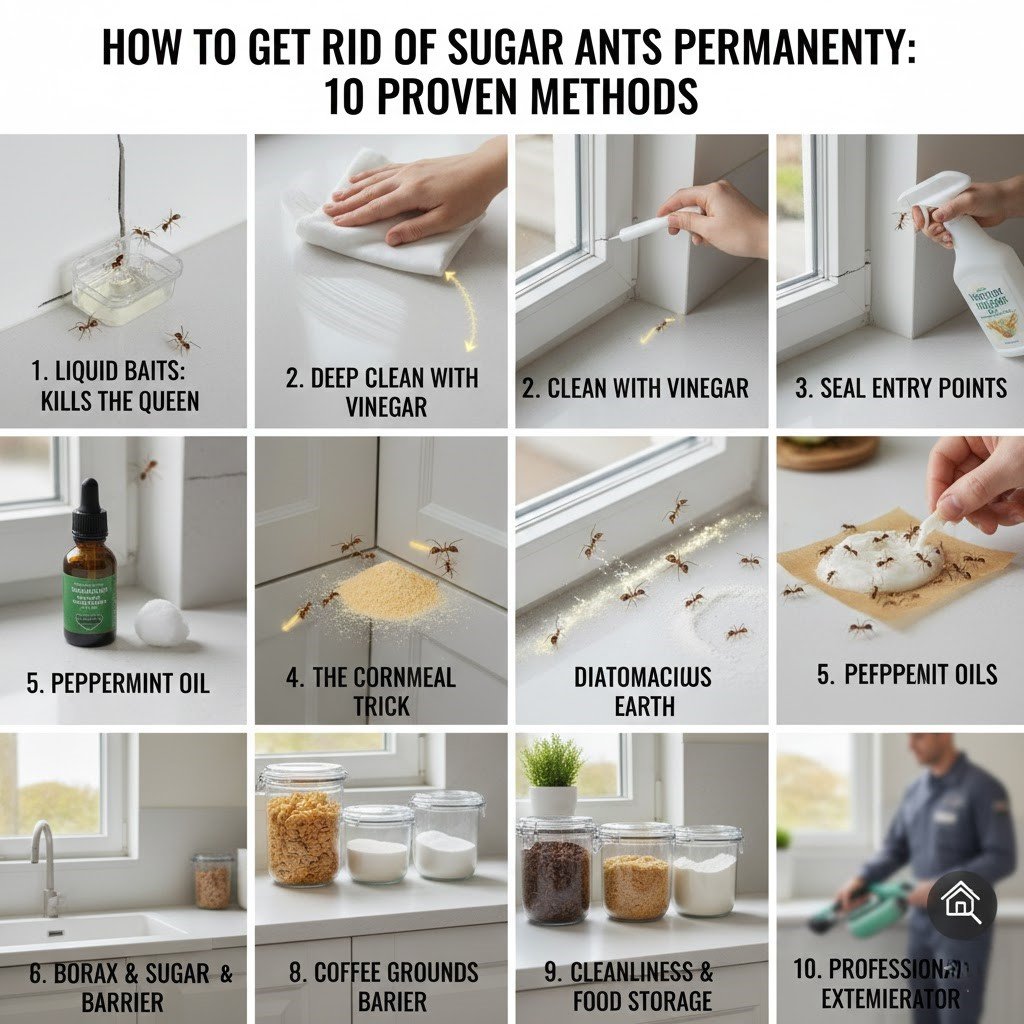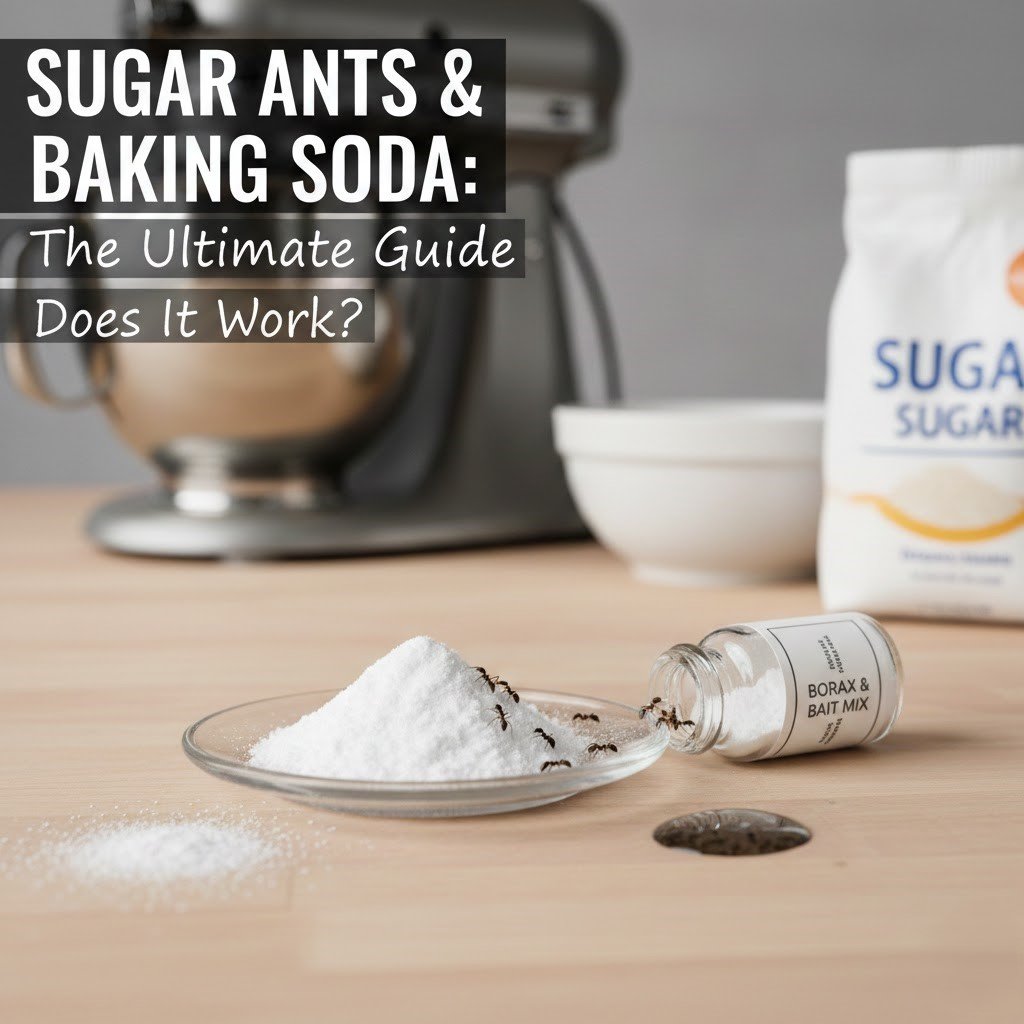
Finding a trail of tiny black insects marching across your kitchen counter is enough to make any homeowner’s skin crawl. These pests, commonly known as sugar ants, are relentless in their search for sweets, fats, and water. If you’ve tried spraying them only to see them return an hour later, you’ve likely realized that surface-level fixes don’t work. To truly solve the problem, you need the best ant traps for sugar ants—solutions that leverage the ants’ own biology to destroy the colony at its source.
Understanding the “Sugar Ant” Problem
The term “sugar ant” is actually a catch-all phrase used to describe several species, including Odorous House Ants, Pavement Ants, and Pharaoh Ants. What they have in common is a high-energy requirement met by sugary substances.
Unlike larger pests, sugar ants are masters of navigation. They leave behind pheromone trails that act as a GPS for their sisters. This is why you see them moving in distinct lines. To stop them, you cannot simply kill the foragers you see; you must target the queen hidden deep within your walls.
How Ant Traps for Sugar Ants Actually Work
Most people make the mistake of using contact killers (sprays) first. While satisfying, this is counterproductive. When a colony senses a sudden drop in foragers, it can trigger “budding,” where the colony splits and creates multiple new queens, actually worsening your infestation.
Ant traps for sugar ants work on the “Trojan Horse” principle:
- Attraction: The trap contains a sweet bait that is irresistible to the scouts.
- Consumption: The ants eat the bait and, more importantly, carry it back to the nest.
- Delayed Action: The active ingredient is slow-acting. This ensures the ant lives long enough to share the poison with the larvae and the queen.
- Elimination: Once the queen consumes the bait, the colony’s reproductive cycle ends, and the infestation collapses.
Expert Tip: If you see ants swarming a new trap, do not kill them. This is exactly what you want. Every ant at the trap is a delivery driver taking the solution back to the nest.
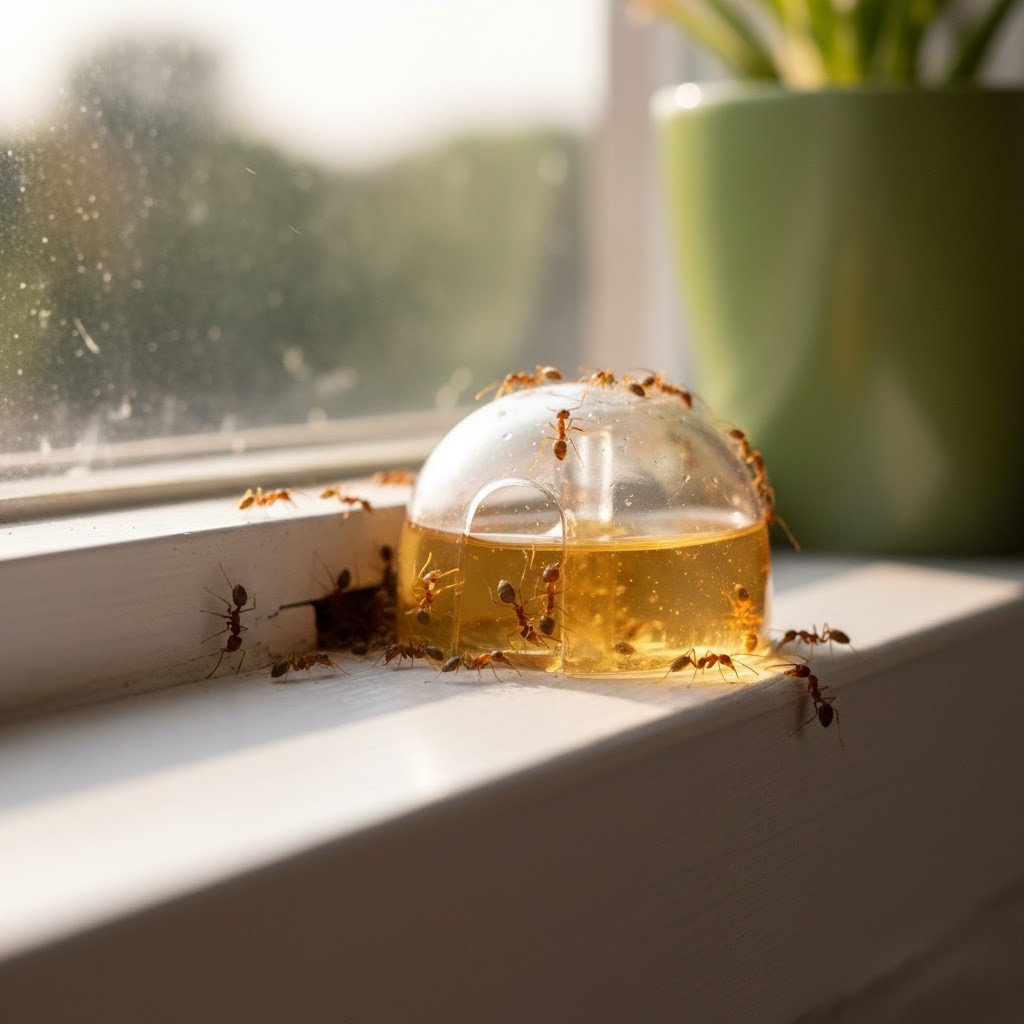
Effective liquid ant traps allow sugar ants to feed and return to the colony with the bait.
The Best Ant Traps for Sugar Ants: Top Recommendations
Choosing the right trap depends on where the ants are and how severe the trail is. Here are the categories that professional exterminators and homeowners trust most.
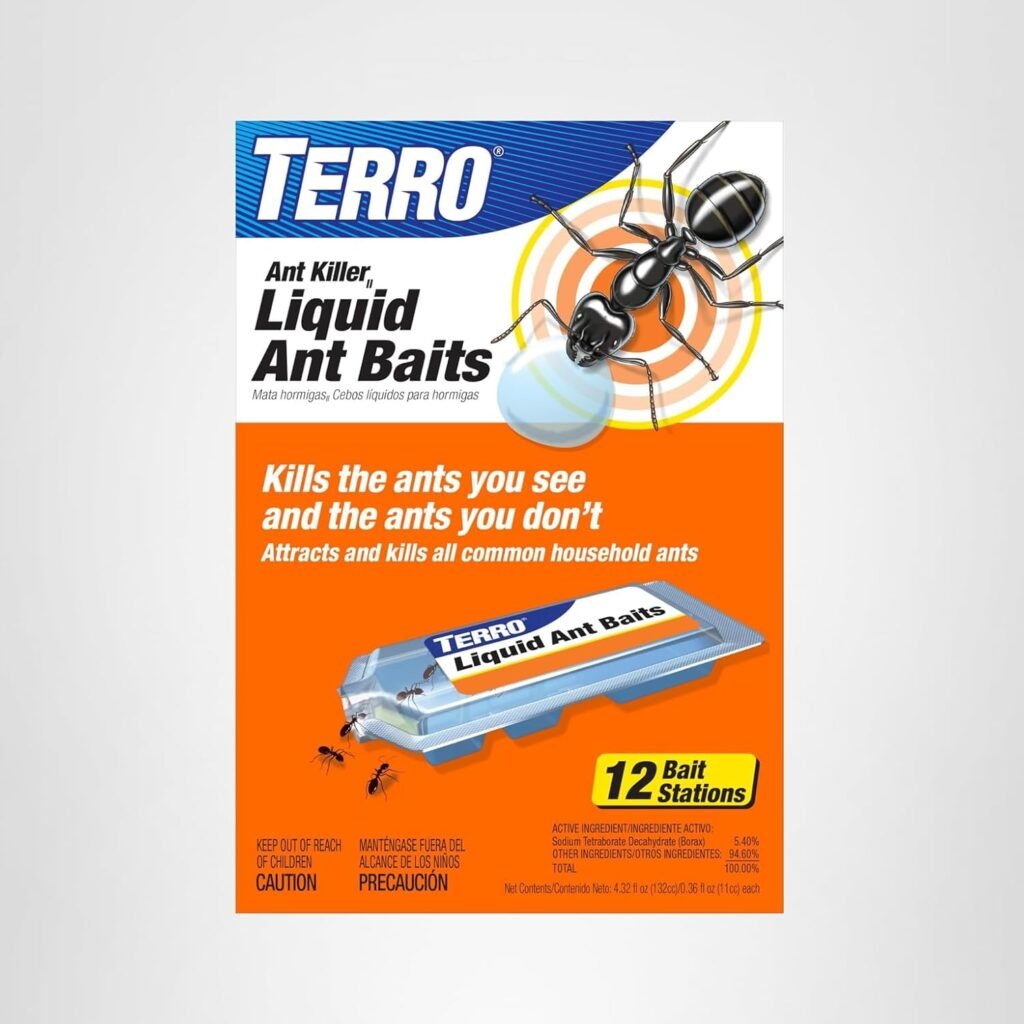
1. Liquid Bait Stations (The Gold Standard)
Liquid baits are arguably the most effective ant traps for sugar ants. Because these ants have tiny mouthparts designed for liquid intake (like nectar), they can consume liquid baits much faster than solids.
- Best for: Kitchen counters, pantries, and indoor bathroom use.
- Why they work: They mimic the honeydew ants seek in nature.
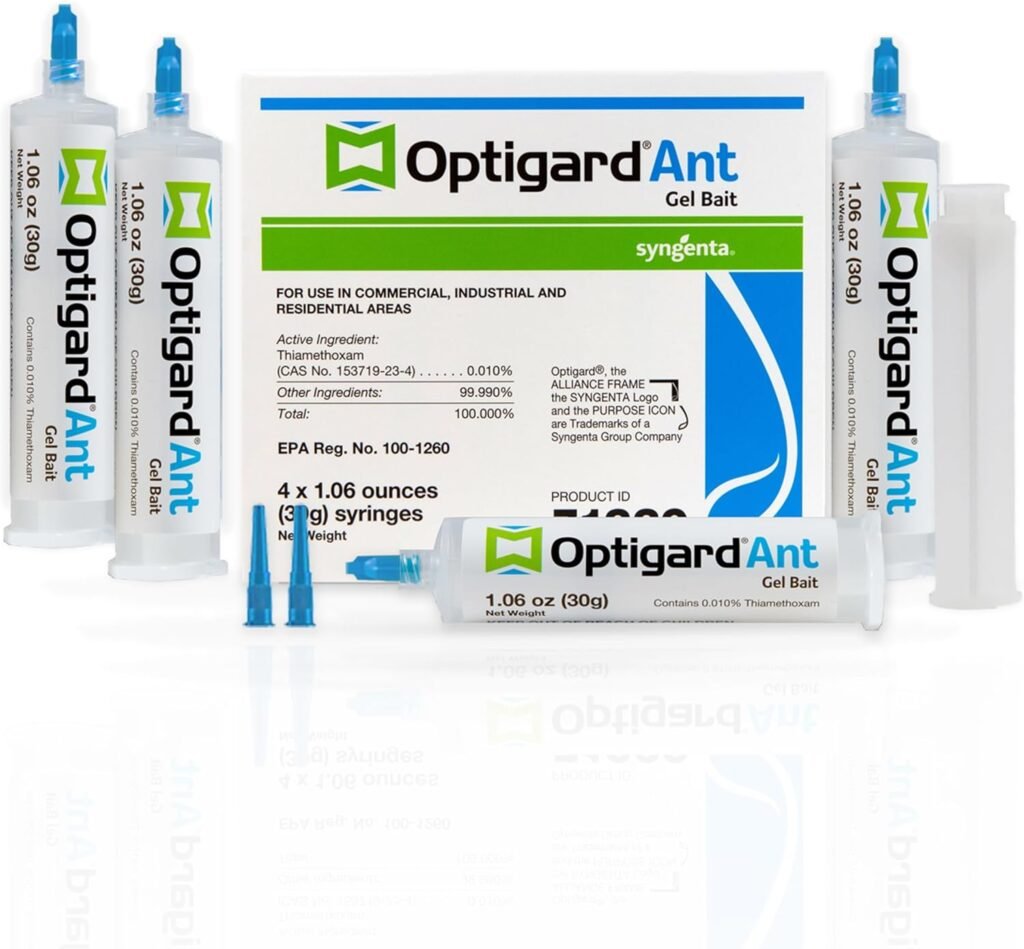
2. Gel Baits for Cracks and Crevices
Sometimes, a bulky plastic trap won’t fit where the ants are emerging. Gel baits allow you to apply the “trap” directly into the gaps of your backsplash or around pipe penetrations.
- Pros: Highly discreet; can be placed out of reach of pets.
- Cons: Can dry out over time, requiring re-application.
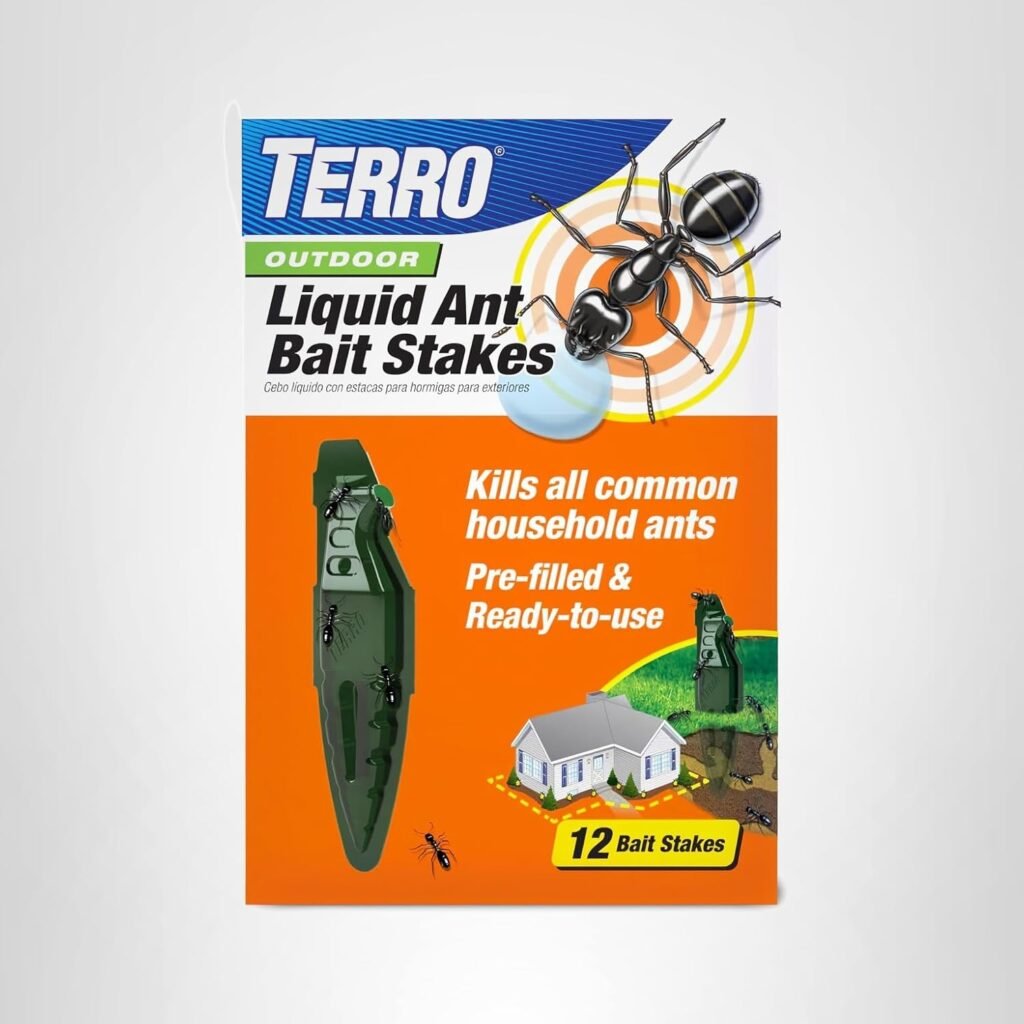
3. Outdoor Stakes and Perimeter Traps
If you see ants entering from your garden or foundation, you need a weather-resistant solution. Outdoor stakes protect the bait from rain and sun while intercepting the trail before it enters your home.
| Trap Type | Best For | Effectiveness | Ease of Use |
| Liquid Traps | Indoor surfaces | Very High | 5/5 |
| Gel Baits | Hard-to-reach cracks | High | 4/5 |
| Outdoor Stakes | Perimeter protection | Medium-High | 5/5 |
| Granular Bait | Large yard areas | Medium | 3/5 |
Where to Place Your Traps for Maximum Success
Placement is more important than the brand of trap you buy. If the ants have to go out of their way to find the bait, they might ignore it in favor of the crumbs under your toaster.
- Follow the Trail: Place traps directly adjacent to the ant line, but not directly on top of it (which can startle them).
- Focus on Moisture: Sugar ants love water. Place traps near sinks, behind toilets, and near leaking appliances.
- Heat Sources: Ants often nest near warmth, such as behind the refrigerator or under the dishwasher.
- Points of Entry: Place traps near windowsills and door frames where you’ve seen activity.
Common Mistakes to Avoid
Even the best ant traps for sugar ants will fail if the environment isn’t managed correctly.
- Cleaning Too Much: While cleanliness is good, avoid using harsh bleach or ammonia cleaners near your traps. These chemicals act as repellents and will “mask” the bait, making it invisible to the ants.
- Competing Food Sources: If there is an open honey jar next to a trap, the ants will choose the honey. Sanitize your space by sealing all food in airtight containers during the baiting process.
- Premature Removal: Don’t remove the trap as soon as you stop seeing ants. Keep it there for an additional 3–5 days to ensure the very last of the hatching larvae are eliminated.
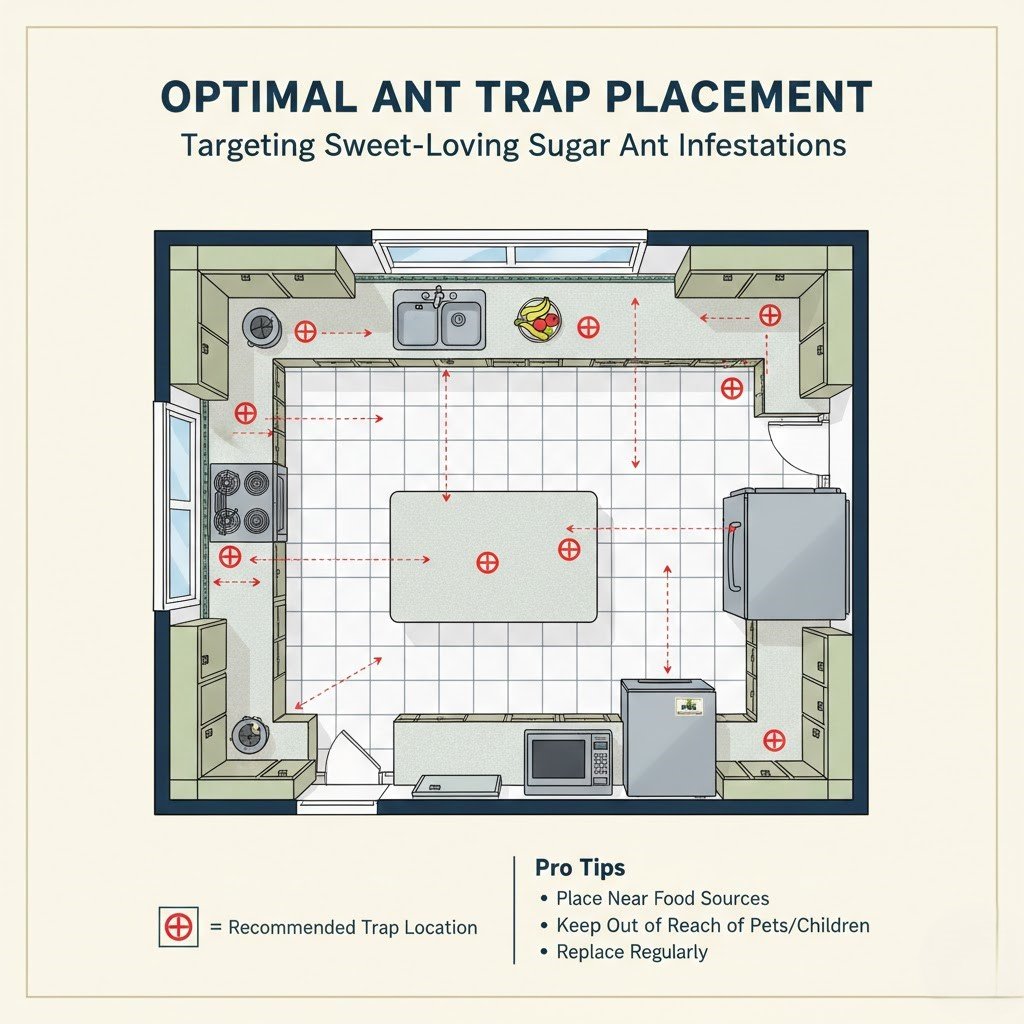
Optimal placement of sugar ant traps includes areas near water sources and along established pheromone trails.
When Traps Aren’t Enough: The Integrated Approach
In severe cases, traps should be part of a broader “Integrated Pest Management” (IPM) strategy. This involves:
- Exclusion: Using silicone caulk to seal the tiny holes where ants enter.
- Habitat Modification: Trimming bushes and trees so they don’t touch your siding (this creates an “ant bridge”).
- Moisture Control: Fixing leaky pipes that provide the hydration the colony needs to survive.
According to research from the University of California Agriculture and Natural Resources, baiting is significantly more effective than traditional spraying because it addresses the biology of the colony rather than just the individual insects.
Safety Considerations for Pets and Children
While most modern ant traps for sugar ants use low-toxicity active ingredients (like Borax), they should still be handled with care.
- Look for “tamper-resistant” stations if you have curious pets.
- Place gel baits deep into cracks where small fingers cannot reach.
- Always read the manufacturer’s label for specific safety precautions.
If you find that your ant problem is persistent or you’re dealing with multiple colonies across a large property, professional intervention might be necessary. Sometimes, the source of the infestation is located in a crawlspace or wall void that consumer-grade products simply can’t reach. Expert advice can save you months of frustration and protect your home’s hygiene.
Read More Guide: What Do Sugar Ants Look Like? A Guide to Tiny Sugar Ants
Frequently Asked Questions
How long does it take for sugar ant traps to work?
Typically, you will see a significant reduction in activity within 48 to 72 hours. However, for a total colony collapse, it can take up to two weeks depending on the size of the nest.
Why are the ants ignoring the trap I set?
Ants can be “finicky.” If they are currently focused on a protein source (like grease), they may ignore a sugar-based bait. Additionally, if the bait is old or has been contaminated by household cleaners, they will avoid it.
Can I make my own sugar ant traps at home?
Yes, a common DIY mixture is Borax and sugar water. While effective, commercial traps are often preferred because the concentration of the active ingredient is precisely calibrated to ensure the ant doesn’t die before reaching the queen.
Do I need to leave the traps out all year?
It is best to use traps at the first sign of activity in the spring. Once the infestation is gone, you can remove them, but maintaining a clean, sealed environment is the best year-round defense.
Are liquid or bait stations better for sugar ants?
For sugar ants specifically, liquid baits are generally superior. Their biology is optimized for drinking liquids, allowing them to transport more of the active ingredient back to the colony more efficiently than solid pellets.
Conclusion
Eliminating sugar ants requires a shift in mindset: you aren’t just cleaning a kitchen; you are winning a biological war. By using the best ant traps for sugar ants, placing them strategically along pheromone trails, and resisting the urge to spray the foragers, you can successfully collapse the colony.
Key Takeaways:
- Target the Queen: Use slow-acting baits, not instant-kill sprays.
- Placement is Key: Place traps near water sources and established trails.
- Patience Wins: Allow 1–2 weeks for the baiting process to complete.
- Sanitize: Remove competing food sources so the bait is their only option.
With these steps, you can reclaim your home from these persistent pests and ensure your pantry remains for your family only—not the ants.