If you have ever woken up to find a microscopic army invading your leftover birthday cake or swarming a drop of spilled juice, you know the immediate panic of wanting them gone—now. The quest to find what kills sugar ants often leads homeowners down a path of frustration, involving half-empty spray bottles and home remedies that only seem to work for a few hours.
The truth is, killing the ants you see is only 1% of the battle. To truly solve the problem, you need to understand the best way to kill sugar ants at the source: the colony. In this guide, we will break down the biological weaknesses of these pests, the most effective lethal agents available, and how to ensure they never come back.
Why “Quick Kills” Often Fail
The biggest mistake people make when researching what kills sugar ants is reaching for a contact-killer spray. When you spray a line of ants with a typical aerosol, they die instantly. However, sugar ants are colonial organisms. When the foragers (the ones on your counter) don’t return, the colony senses a threat.
In many species, such as the Pharaoh Ant, this can trigger “budding”—a process where the queen and a group of workers split off to start new, secondary colonies in different parts of your house. By killing ten ants today with a spray, you might be creating three new colonies for tomorrow. To win, we must be smarter than the scouts.
The Science: What Kills Sugar Ants Effectively?
To eliminate these pests, we have to look at substances that interfere with their biology. Sugar ants are highly attracted to carbohydrates and proteins, which we can use as a “Trojan Horse” to deliver lethal doses of active ingredients.
1. Borat Compounds (Borax and Boric Acid)
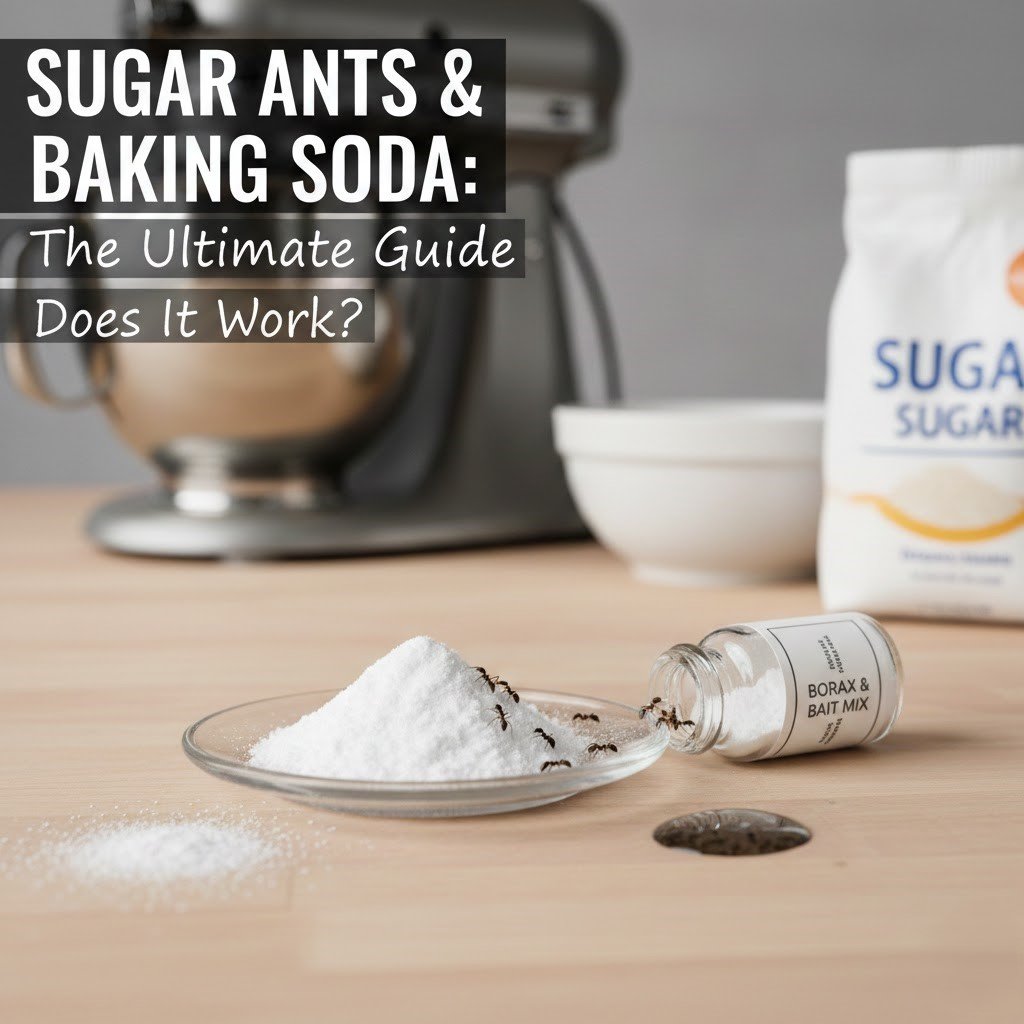
Borax is perhaps the most famous answer to what kills sugar ants. It is a natural mineral that, when ingested, interferes with the ant’s digestive system and gradually abrades their exoskeleton.
- Why it works: It is slow-acting. This is crucial because it allows the worker ant to survive long enough to share the poisoned “food” with the queen through a process called trophallaxis.
- How to use it: Mix Borax with sugar water or peanut butter to create a bait.
2. Spinosad and Indoxacarb
These are professional-grade active ingredients found in many high-end baits. They target the nervous system of the insect.
- The Benefit: These are designed specifically to be the best way to kill sugar ants because they are non-repellent. The ants cannot detect the poison, so they feed freely until the entire colony is compromised.
3. Diatomaceous Earth (DE)
If you want a mechanical killer rather than a chemical one, food-grade Diatomaceous Earth is an excellent choice.
- Mechanism: DE consists of fossilized algae with razor-sharp edges (on a microscopic level). It cuts through the waxy coating of the ant’s body, causing them to dehydrate and die.
- Best for: Puffing into wall voids, behind outlets, and under appliances where ants travel.
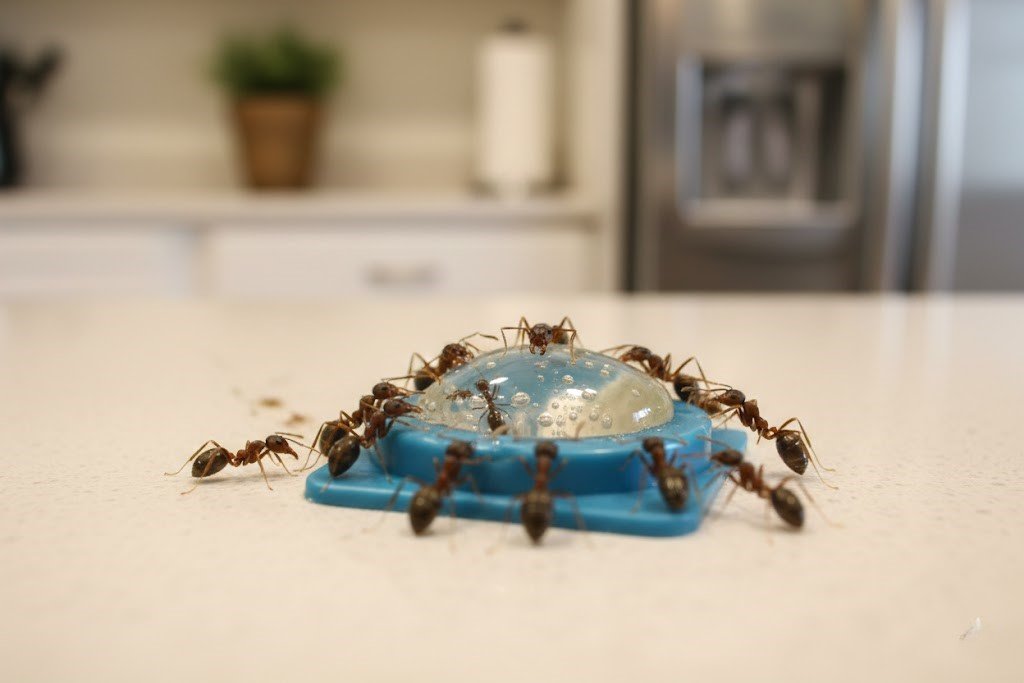
Caption: Using slow-acting liquid baits is the most effective way to ensure the lethal agent reaches the queen.
Comparing Methods: The Best Way to Kill Sugar Ants
Not all methods are created equal. Depending on your environment—whether you have toddlers, pets, or a commercial kitchen—your choice of “killer” will vary.
| Method | Speed of Kill | Colony Elimination | Safety Level |
| Vinegar Sprays | Instant (Contact) | Low | High |
| Boric Acid Baits | 3–7 Days | High | Moderate |
| Gel/Liquid Baits | 2–5 Days | Very High | High (if enclosed) |
| Diatomaceous Earth | 24–48 Hours | Moderate | High (Food Grade) |
The Step-by-Step Strategy for Total Elimination
Knowing what kills sugar ants is only half the battle; the other half is the execution. Follow this professional-grade protocol to clear your home.
Phase 1: Identify and Sanitize
Before applying any bait, you must remove the competition. If there is an open honey jar next to your trap, the ants will choose the honey every time.
- Wipe down counters with soapy water (this also disrupts pheromone trails).
- Seal all open food in airtight containers.
- Fix leaky faucets; sugar ants are often hunting for water as much as sugar.
Phase 2: Bait Placement
The best way to kill sugar ants is to place the bait exactly where they are already traveling. Look for “ant highways” along baseboards or under the sink.
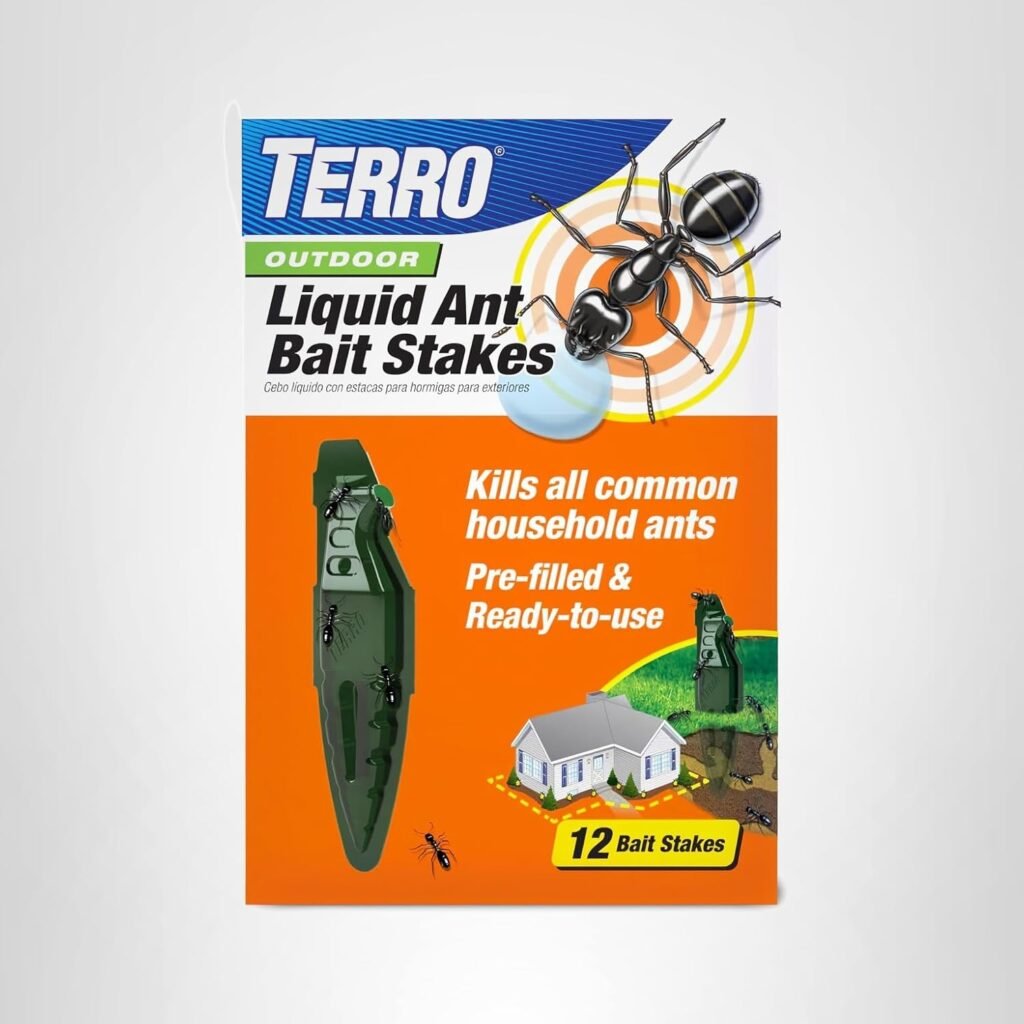
- Don’t over-clean the trail: Leave the pheromone trail intact right where you place the bait so other ants can find it.
- Use multiple stations: Place bait near every entry point you can find.
Phase 3: The “Wait and See”
This is the hardest part. You will see more ants at first. Resist the urge to squish them! Every ant you see is a delivery driver carrying the poison back to the nest. Within 48 to 72 hours, the numbers should begin to plummet.
Natural Killers: Household Items That Work
If you prefer to avoid store-bought chemicals, there are several pantry staples that answer the question of what kills sugar ants.
- Boiling Water: If you find the nest outside in the pavement, pouring boiling water directly into the mound provides an instant, chemical-free kill.
- Cornmeal: While a popular myth suggests ants explode after eating cornmeal, the reality is more subtle. Ants cannot digest the complex grains, and while it doesn’t always kill the colony, it can disrupt their feeding patterns.
- Essential Oils: Highly concentrated peppermint, clove, and tea tree oils contain compounds that are neurotoxic to ants upon direct contact.
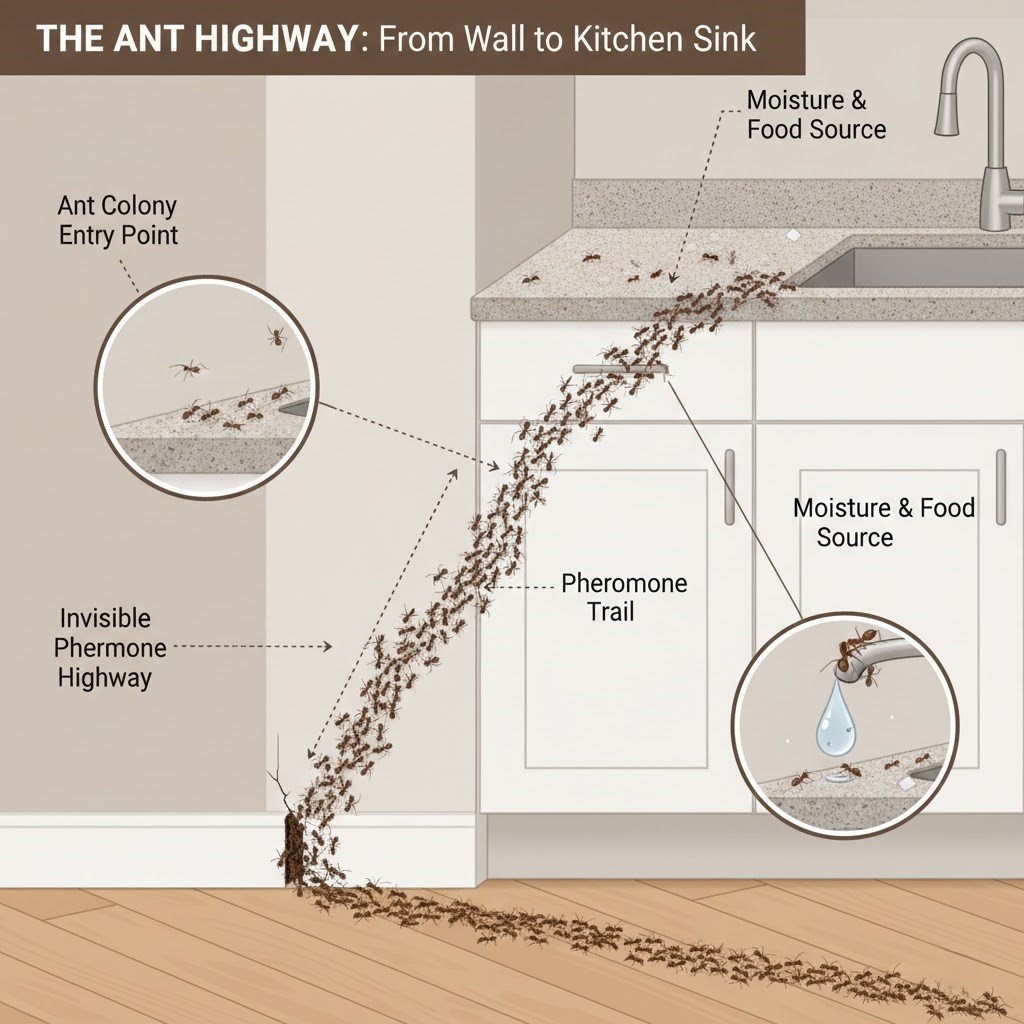
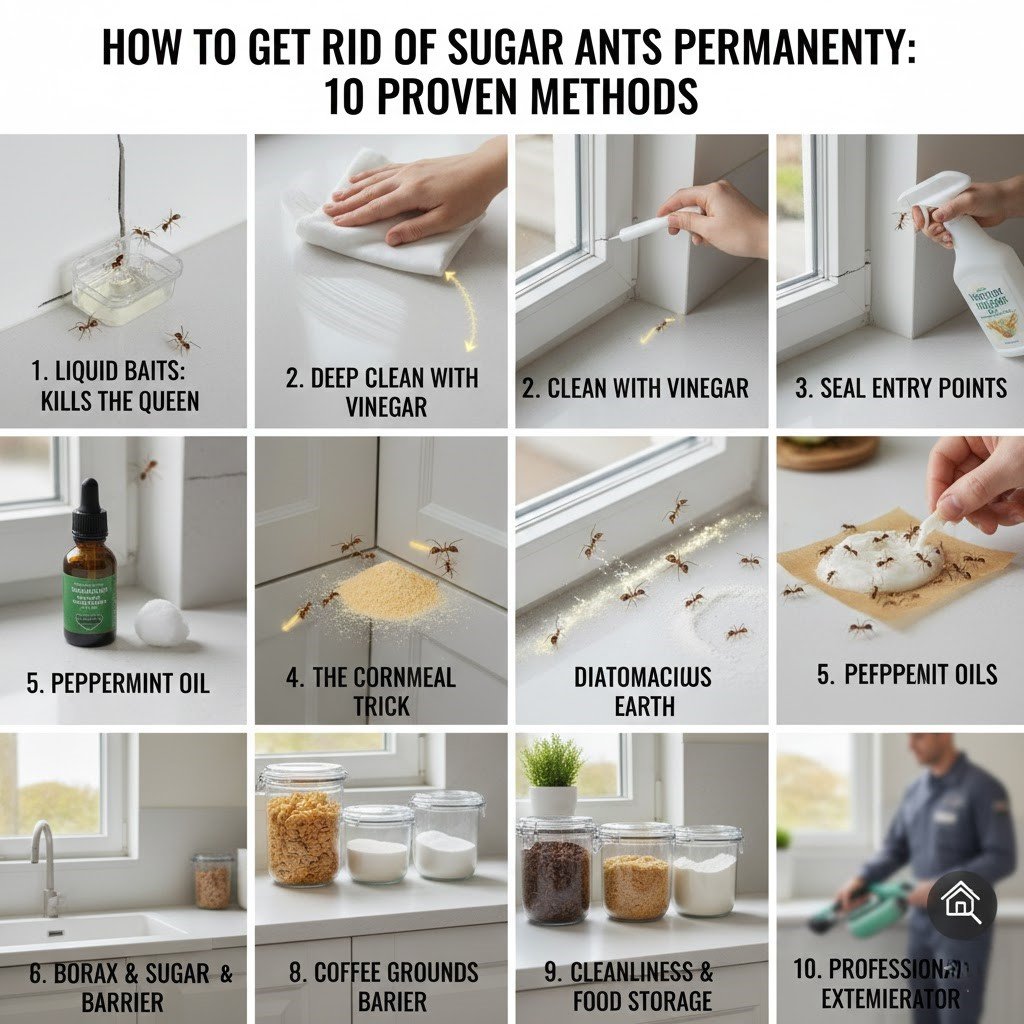
Identifying entry points is vital for placing baits where they will be most effective.
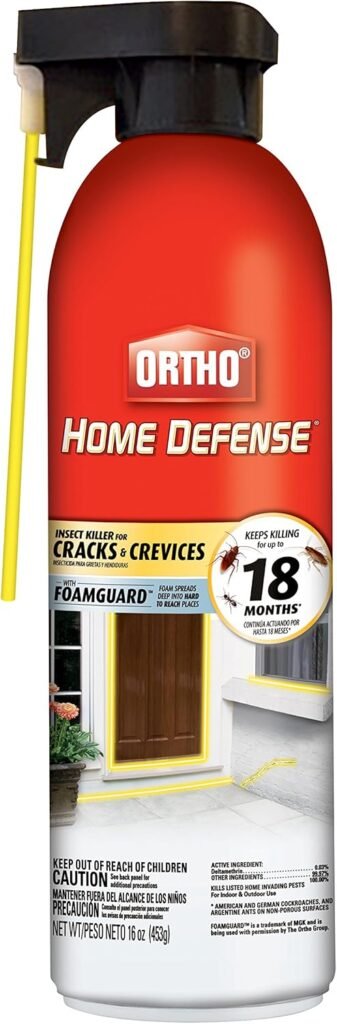
Expert Insights on Persistent Infestations
As an authority in pest behavior, it is important to note that “sugar ants” is a broad term. If you are dealing with Carpenter Ants (which are often mistaken for sugar ants but are larger), the methods above may not be enough. Carpenter ants tunnel through wood and require specialized foaming agents to reach the heart of the colony.
Furthermore, research from The University of California Statewide IPM Program emphasizes that sanitation is the foundation of any pest control effort. Without removing the attractant, you are simply treating the symptoms of a larger environmental issue.
Read More Guides: Best Ant Traps for Sugar Ants: Top-Rated Solutions to Stop Infestations
FAQ Section
What kills sugar ants instantly?
Windex or a 50/50 solution of vinegar and water will kill sugar ants on contact. However, remember that instant kills do not stop the colony; they only remove the individual ants you see.
Does cinnamon kill sugar ants?
Cinnamon does not typically kill ants, but it acts as a strong repellent. The fine powder interferes with their ability to breathe and smell, but they will usually just find a way around it.
Is the best way to kill sugar ants using bait or spray?
Bait is almost always superior. Baits utilize the ants’ social structure to kill the queen, whereas sprays only kill a small percentage of the workers and may cause the colony to relocate deeper into your walls.
How long does it take for Borax to kill the colony?
Depending on the size of the colony, it usually takes between 3 days and 2 weeks. You must be consistent and ensure the bait stays fresh and moist during this time.
Why do I have sugar ants even though my house is clean?
Ants are opportunistic. They can enter through holes as small as a grain of sand looking for moisture or warmth. Even a clean house can have “micro-spills” behind appliances or inside wall voids that attract them.
What is the most powerful professional ant killer?
Active ingredients like Fipronil or Advion (Indoxacarb) are considered the gold standard in the professional industry for total colony elimination.
Conclusion
Finding out what kills sugar ants is a journey that starts with a single scout and ends with a comprehensive strategy. While household items like vinegar and Borax are effective starting points, the best way to kill sugar ants is a multi-faceted approach: baiting to kill the queen, cleaning to remove attractants, and sealing to prevent re-entry.
Summary of Recommendations:
- Prioritize Baits: Move away from contact sprays to focus on colony-killing baits.
- Deep Clean: Remove all competing food sources to make your traps irresistible.
- Be Patient: Let the ants carry the solution back to the nest; don’t kill the “messengers.”
- Seal Gaps: Use caulk to close off the entry points you identified during the process.
By following these steps, you can stop the cycle of seasonal invasions and maintain a clean, ant-free home. If the problem persists, don’t hesitate to consult with an expert to find the hidden source of the infestation.